ACL Injury
A tear of the anterior cruciate ligament, commonly from sports involving twisting or landing. Reconstruction surgery is often recommended for active patients.
Audience:
Adult
Region:
Knee
Type:
Sometimes Surgical
Recovery:
9-12 months
A tear of the anterior cruciate ligament, commonly from sports involving twisting or landing. Reconstruction surgery is often recommended for active patients.
Audience:
Adult
Region:
Knee
Type:
Sometimes Surgical
Recovery:
9-12 months
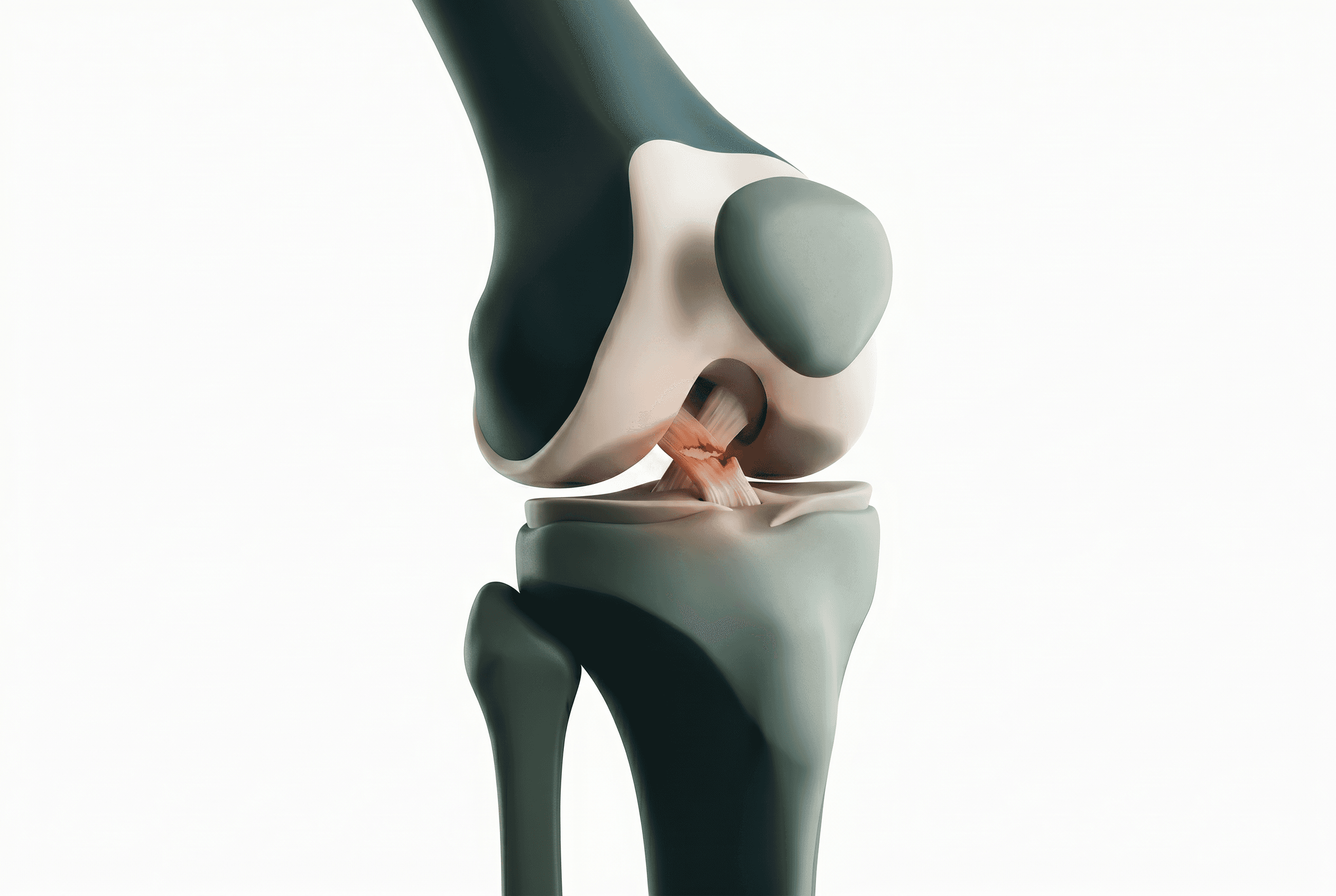
The anterior cruciate ligament — the ACL — runs through the centre of your knee, connecting the thigh bone to the shin. It's the main structure that stops the knee from giving way when you twist, change direction or land from a jump.
An ACL injury happens when this ligament is partially or fully torn. It's one of the most well-known sports injuries, but it doesn't only happen to athletes — a slip, a fall awkwardly, or a sudden change of direction in everyday life can all cause it.
ACL tears are usually classified as:
Partial tear — the ligament is damaged but some fibres remain intact
Complete rupture — the ligament is fully torn through
The pattern of injury, your activity level and whether other knee structures are involved all influence what happens next.
Many people describe a distinct "pop" at the moment of injury, often followed by their knee giving way underneath them. The knee usually swells significantly within a few hours.
Beyond that, you may notice:
A feeling that the knee is unstable or unreliable
Pain deep inside the joint
Difficulty straightening the knee fully
A sense that the knee can't be trusted to hold your weight, particularly when turning
Some people walk into clinic days after the injury convinced they've just sprained something. Others know immediately that something significant has happened. Both are common.
Diagnosis begins with a careful clinical examination. Specific tests can demonstrate whether the ACL is doing its job — and in experienced hands, this often gives a very clear picture.
ACL injuries frequently occur alongside damage to other knee structures, particularly the meniscus or the MCL. Identifying this from the start is important because it changes what the right plan looks like.
An MRI scan is typically arranged to confirm the diagnosis and assess what else may be involved.
Treatment depends on the nature of the tear, your activity goals and what the rest of the knee looks like. Some ACL injuries are managed without surgery, particularly in less active individuals or where stability returns naturally with rehabilitation. Others — especially in patients who want to return to pivoting sports — are best managed with reconstruction surgery.
There isn't a one-size-fits-all answer. The right path depends on your specific injury and what you want to be able to do afterwards. Nev will work through this with you at your consultation, so you can make a decision based on a clear understanding of your options.
Seek a specialist assessment if:
Your knee gave way at the time of injury and continues to feel unreliable
Swelling came on quickly after the injury
The knee feels unstable when twisting or pivoting
You're worried about returning to sport or activity
You've been told you have an ACL injury elsewhere but want a clear plan
The earlier the right diagnosis is made, the more options remain open. Whether or not surgery is the right answer for you, knowing what's happened — and what to do about it — is the first step.