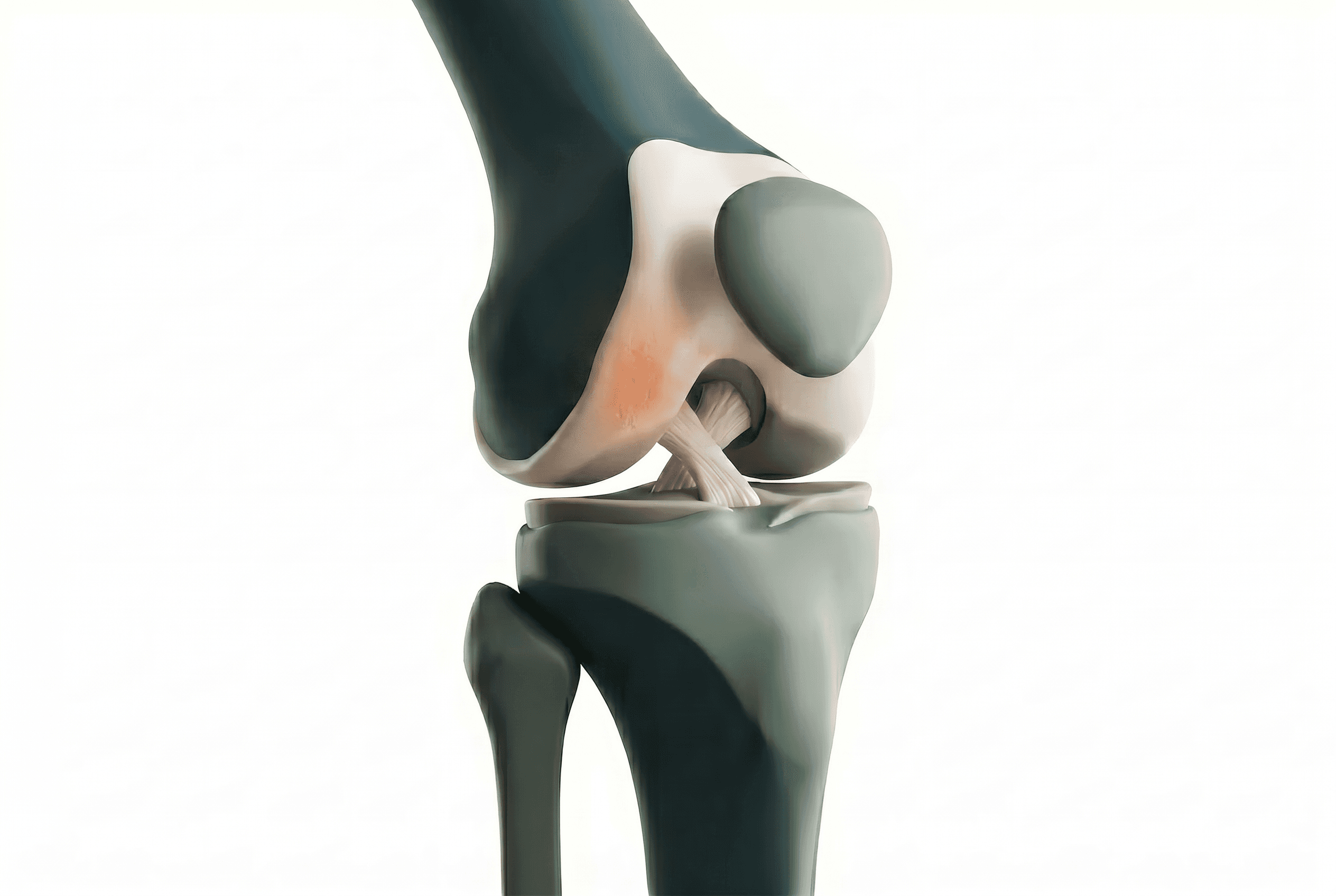
What is a chondral injury?
Articular cartilage is the smooth, glassy surface that covers the ends of the bones inside the knee. It allows the joint to glide with almost no friction. A chondral injury is damage to that surface — a chip, a flap, a defect or an area of softening.
These injuries can happen acutely from a direct impact or twisting injury, or develop more gradually over time. They sometimes occur alongside other knee problems, particularly meniscal tears or ligament injuries.
Cartilage doesn't have a blood supply, which means it has limited ability to heal itself. That makes the right early management particularly important.
What does it feel like?
Symptoms vary depending on the size, location and depth of the defect. You may notice:
Pain in a specific part of the knee, often deep inside
Catching, clicking or a sense of something moving in the joint
Swelling, particularly after activity
Pain on impact activities like running or jumping
A feeling that the knee isn't quite right but you can't pinpoint why
Some chondral injuries cause persistent symptoms; others come and go. Many remain undiagnosed for some time because the picture isn't always clear-cut.
How is it diagnosed?
Clinical examination can raise the suspicion, but cartilage injuries often need imaging to be properly characterised. MRI is the workhorse here — it shows cartilage damage that doesn't appear on X-rays.
Even with high-quality imaging, the full extent of a cartilage injury is sometimes only apparent at the time of arthroscopy (keyhole surgery). The decision to investigate further depends on the clinical picture and how much the symptoms are affecting you.
It's also important to look for associated problems — particularly underlying alignment issues or other injuries that may have caused or contribute to the cartilage damage.
What are the treatment options?
Smaller chondral injuries often respond well to physiotherapy, activity modification and time. Larger or symptomatic defects may benefit from surgical treatment, which can range from keyhole procedures to remove loose fragments through to cartilage repair or transplantation techniques.
The right approach depends on the size and location of the defect, your age and activity level, and what else is going on in the knee. Nev will work through this with you at your consultation, so the plan reflects your specific situation.
When should you get it checked?
Seek a specialist assessment if:
You have persistent pain in a specific part of the knee
The knee catches or locks intermittently
Symptoms are stopping you from doing activities you'd like to do
You've had a previous knee injury and things aren't right
You want a proper assessment of what's going on
Cartilage injuries respond best when addressed thoughtfully and early. The longer they're left, the more limited the options can become.