MCL Injury
A sprain or tear of the medial collateral ligament on the inner knee, usually from a sideways force. Most cases heal with bracing and rehabilitation.
Audience:
Adult
Region:
Knee
Type:
Non-Surgical
Recovery:
4-8 weeks
A sprain or tear of the medial collateral ligament on the inner knee, usually from a sideways force. Most cases heal with bracing and rehabilitation.
Audience:
Adult
Region:
Knee
Type:
Non-Surgical
Recovery:
4-8 weeks
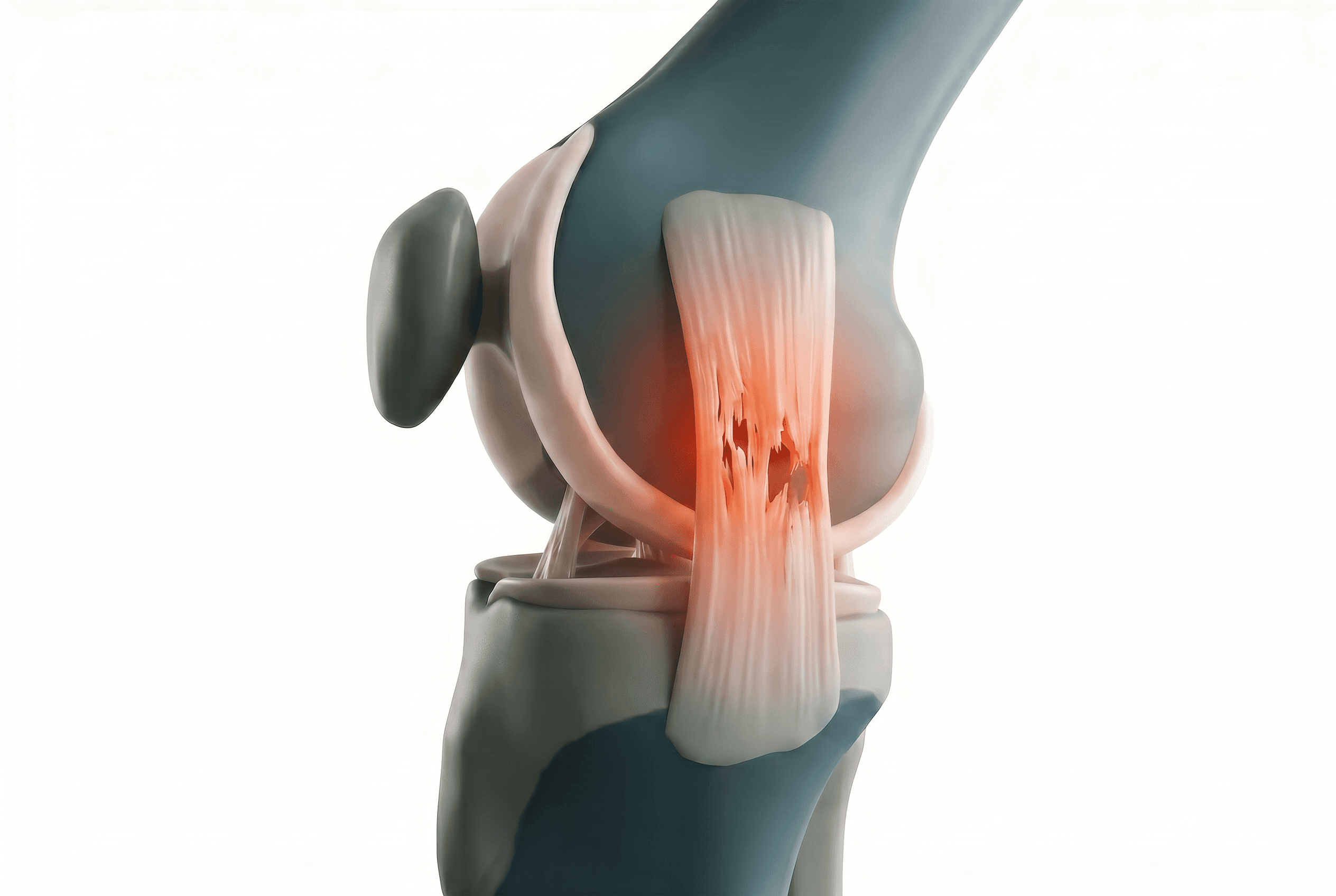
The medial collateral ligament — the MCL — runs along the inner side of your knee. It's one of the key structures that keeps the joint stable, particularly when you twist, pivot or take a force from the side.
An MCL injury happens when this ligament is stretched or torn. It's one of the most common knee injuries in sport, but it can also happen in everyday life — a trip, a fall, or any movement that forces the knee inward.
MCL injuries are classified into three grades:
Grade 1 — the ligament is stretched but intact
Grade 2 — a partial tear
Grade 3 — a complete rupture, which may involve other structures in the knee
The grade of your injury has a significant bearing on how it should be managed — which is why an accurate diagnosis from the outset matters.
Pain along the inner side of the knee is the most common symptom, often with tenderness directly over the ligament.
You may also notice:
Swelling around the inner knee
Stiffness, particularly after rest
A sense that the knee isn't quite right when turning or changing direction
In more significant injuries, a feeling that the knee might give way
Symptoms vary considerably between individuals and between grades of injury. What feels manageable in one person can represent a more significant tear in another — which is why the examination matters as much as the symptoms.
Diagnosis starts with a careful clinical assessment. In experienced hands, examination alone can tell you a great deal — where the injury is, how the ligament is behaving, and whether other structures might be involved.
MCL injuries don't always occur in isolation. Depending on the mechanism and the forces involved, the ACL, meniscus or other ligaments can sometimes be affected alongside the MCL. Identifying this early is important, as it changes the management.
An MRI scan is arranged when the clinical picture requires it — not routinely, but when it adds meaningful information.
Treatment for an MCL injury depends on the grade of the tear, your lifestyle, and your goals — whether that's returning to competitive sport, getting back to work, or simply moving without pain.
There is no single path that's right for everyone, and the right approach isn't always obvious from symptoms alone.
What can be said is that most MCL injuries, managed well and from the right starting point, do very well. What "managed well" looks like in your specific case is something Nev will work through with you at your consultation.
Seek a specialist assessment if:
Pain on the inner side of the knee isn't settling within a few days
The knee feels unstable or unreliable
Swelling is persistent
You're struggling to return to sport or normal activity
You've been seen elsewhere but still don't feel confident about what's happened or what to do next
An accurate diagnosis early in the process makes a real difference — both to the speed of recovery and to your confidence in knowing what you're dealing with.