Osteochondral Injury
An injury affecting both cartilage and the underlying bone, often from impact or twisting. Larger lesions may require surgical fixation or grafting.
Audience:
Adult
Region:
Knee
Type:
Sometimes Surgical
Recovery:
3-6 months
An injury affecting both cartilage and the underlying bone, often from impact or twisting. Larger lesions may require surgical fixation or grafting.
Audience:
Adult
Region:
Knee
Type:
Sometimes Surgical
Recovery:
3-6 months
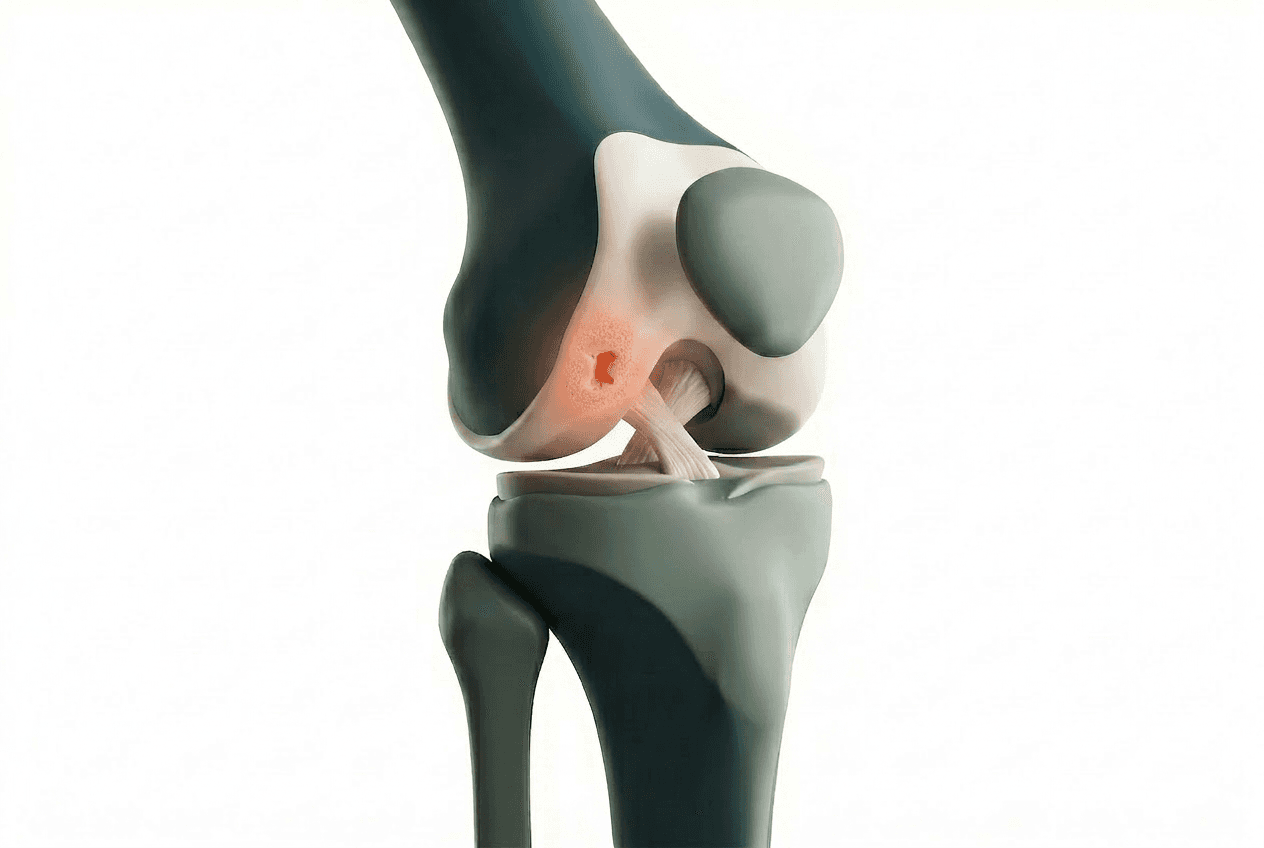
An osteochondral injury involves both the cartilage surface and the bone immediately beneath it. Unlike a pure chondral injury, which only affects the cartilage, this type of injury also damages a layer of underlying bone.
These injuries usually happen acutely — a hard impact, a twisting fall, or a forceful collision. Sometimes a piece of cartilage and bone breaks loose entirely, becoming a free fragment inside the joint.
The bone involvement matters because it changes how the injury is assessed and treated. The size of the affected area, whether the fragment is stable or detached, and where in the joint it sits all influence the right plan.
Symptoms can be quite distinct from a pure cartilage injury and may include:
Significant pain at or after the moment of injury
Swelling that comes on relatively quickly
Catching or locking if a fragment has detached
A sense of instability or that the knee can't be trusted
Persistent deep pain, particularly with weight-bearing
If a loose fragment is sitting in the joint, the symptoms can change from day to day depending on where the fragment is positioned.
Examination and the history of the injury raise the suspicion, but imaging is essential. X-rays may show a fragment or a defect in the bone surface. MRI gives a fuller picture — the size of the affected area, the depth of the bone involvement, and whether the fragment is stable.
Sometimes a CT scan adds useful detail about the bony component of the injury. The combination of imaging and clinical assessment determines the urgency and direction of treatment.
Stable, smaller injuries can sometimes heal with rest, protected weight-bearing and a structured rehabilitation programme. Larger lesions, displaced fragments or unstable injuries usually need surgery — to fix the fragment back in place if possible, or to manage the defect that's been left behind.
Treatment decisions are individual. The size, location, fragment stability and your activity goals all matter. Nev will work through this with you at your consultation so any plan is built around your specific situation.
Seek a specialist assessment if:
You've had a significant knee injury that hasn't settled
The knee is locking or catching
Pain and swelling are persistent
You suspect there's a loose fragment in the joint
You've been told there's a bone bruise or chondral injury and want a clear plan
Osteochondral injuries respond best to early, considered intervention. Delay can affect the options that remain available.