PCL Injury
An injury to the posterior cruciate ligament, often from a direct blow to the front of the knee. Many heal without surgery; severe tears may need reconstruction.
Audience:
Adult
Region:
Knee
Type:
Sometimes Surgical
Recovery:
3-6 months
An injury to the posterior cruciate ligament, often from a direct blow to the front of the knee. Many heal without surgery; severe tears may need reconstruction.
Audience:
Adult
Region:
Knee
Type:
Sometimes Surgical
Recovery:
3-6 months
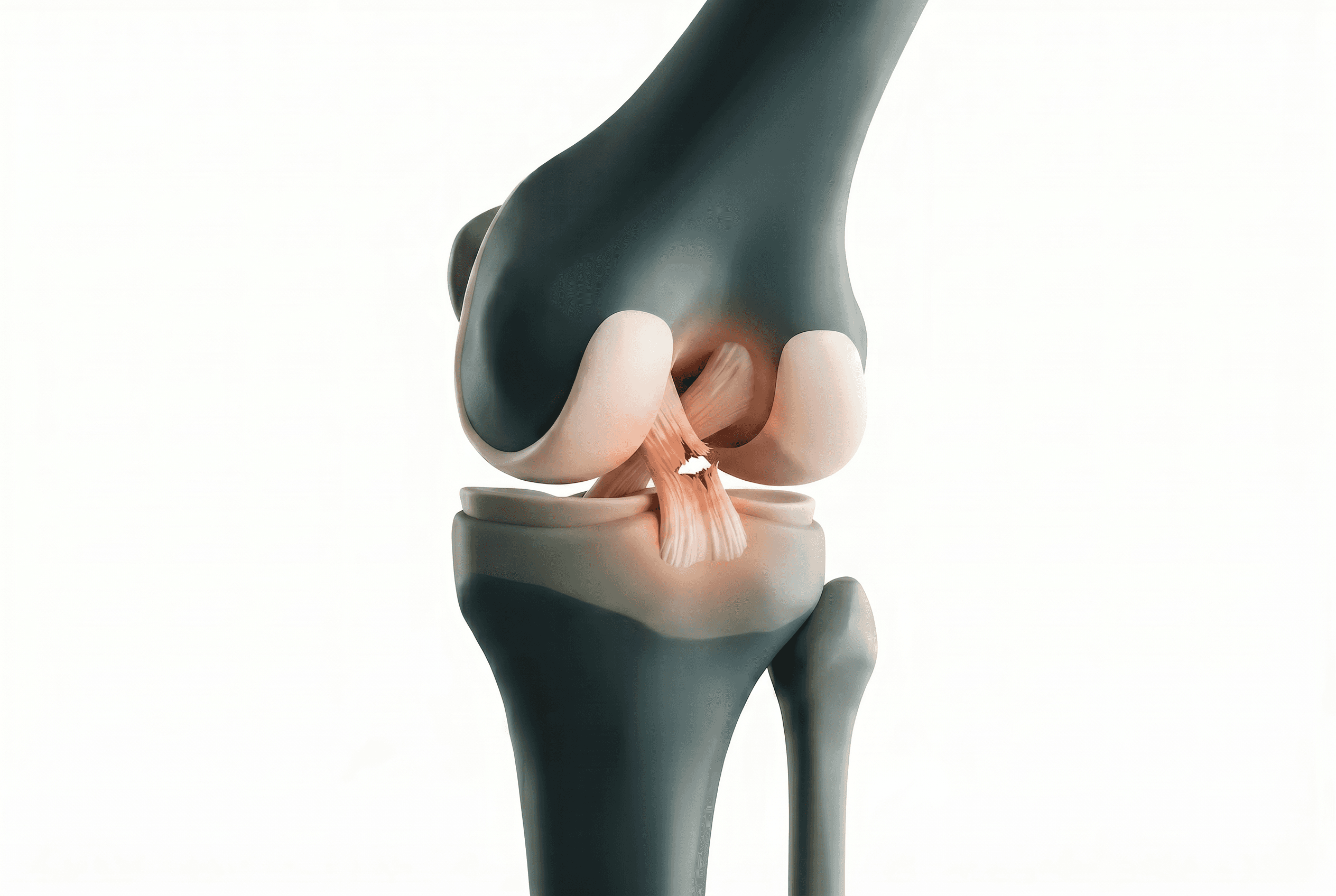
The posterior cruciate ligament — the PCL — is the larger of the two cruciate ligaments inside the knee. It runs from the back of the shin bone up to the thigh bone and prevents the shin from sliding too far backwards.
PCL injuries are less common than ACL injuries and usually happen differently. The classic mechanism is a direct blow to the front of the shin with the knee bent — what's sometimes called a dashboard injury after road traffic collisions, but also seen in sports involving falls onto the knee.
PCL tears are graded from partial to complete and may occur on their own or alongside other ligament injuries.
PCL injuries can be deceptive. Compared with ACL tears, the symptoms are often less dramatic, and some people walk around for weeks or months before seeking assessment. You may notice:
Pain at the back of the knee
Mild to moderate swelling
A vague sense that the knee isn't quite right
Difficulty going down stairs or slopes
An aching or unstable feeling, particularly when slowing down
In higher-grade injuries, particularly when other structures are involved, symptoms are usually more pronounced.
A careful clinical examination is the cornerstone of PCL diagnosis. Specific tests assess how the shin bone behaves relative to the thigh bone — and in experienced hands, the diagnosis is often clear at the bedside.
An MRI scan is typically arranged to confirm the diagnosis and assess the grade of injury. It's particularly important to look for associated injuries — PCL tears can occur alongside damage to other ligaments and the meniscus, and identifying this changes the management.
Many isolated PCL injuries — particularly partial tears — can be managed without surgery, with bracing, physiotherapy and a structured return to activity. Some PCL injuries do remarkably well with this approach.
Higher-grade injuries, those involving multiple ligaments, or cases where significant instability persists despite rehabilitation may need reconstruction surgery. The right approach is individual and depends on the specifics of your injury and your activity goals — Nev will work through this with you at your consultation.
Seek a specialist assessment if:
You've had a significant knee injury and the diagnosis isn't clear
The knee feels unstable, particularly going downhill or down stairs
Pain at the back of the knee isn't settling
You're worried about returning to sport or activity
You've been told there might be a PCL injury and want a clear plan
PCL injuries are sometimes underdiagnosed because the early symptoms can be subtle. Getting a clear assessment makes a real difference to outcomes.