Supra-, Pre-, & Infra-patellar Bursitis
Inflammation of the bursae above or below the kneecap, often from overuse or kneeling. Conservative management is the mainstay.
AudienceAdult
RegionKnee
TypeNon-Surgical
Recovery4-8 weeks
Inflammation of the bursae above or below the kneecap, often from overuse or kneeling. Conservative management is the mainstay.
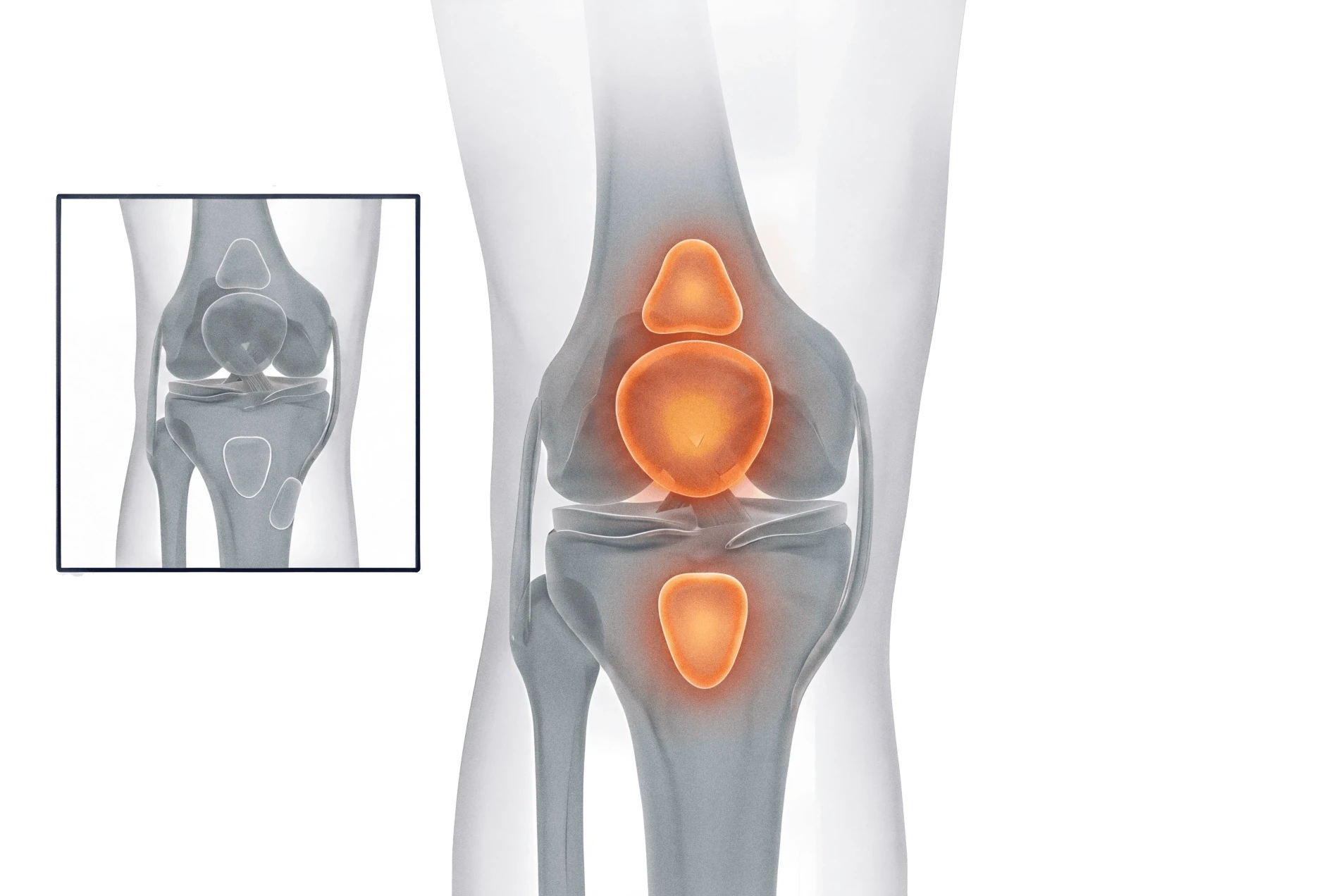
Bursae are small fluid-filled sacs that sit between tissues to reduce friction. Around the knee, several bursae lie above the kneecap (suprapatellar) and below it (infrapatellar). When one of these becomes inflamed, the result is bursitis.
The most common causes are repetitive friction, kneeling work is classically associated with the bursa just below the kneecap, and overuse from sport. Direct injury, infection or other inflammatory conditions can also cause bursitis but are less common.
These conditions are usually localised and well-defined, and they almost always settle with the right management.
Symptoms depend on which bursa is involved. Common features include:
Localised pain above or below the kneecap
Visible swelling that's sometimes quite striking
Warmth or redness over the area
Pain when kneeling or with direct pressure
Stiffness with knee movement, particularly bending
If a bursa becomes infected, which is uncommon but important to recognise, it becomes hot, very tender, and may be associated with feeling generally unwell. This needs prompt assessment.
Diagnosis is largely clinical: the location and pattern of symptoms usually make it clear.
Ultrasound can confirm the diagnosis, assess the size of the bursa and exclude other problems. It's not always needed but is useful when the picture isn't typical or when an injection or aspiration is being considered.
If there's any concern about infection, fluid may be sent for laboratory analysis to confirm or exclude this, managing infected bursitis is quite different from managing inflammatory bursitis.
Most cases settle with conservative management, rest from aggravating activities, anti-inflammatory measures, knee protection (particularly avoiding kneeling) and physiotherapy where appropriate.
Aspiration of the bursa, with or without a steroid injection, can be useful when symptoms are persistent. Surgical removal of the bursa is occasionally considered for chronic cases that don't respond to other treatments. Nev will work through the right approach with you at your consultation.
Seek a specialist assessment if:
Knee swelling above or below the kneecap is persistent
Pain is interfering with work, kneeling or daily activities
Symptoms keep returning despite rest
You're unsure whether the area might be infected (hot, very tender, feeling unwell)
You want a clear diagnosis and a plan that fits your situation
Suspected infection of any bursa is a reason to seek prompt assessment rather than waiting: it's much easier to manage early than late.
