Patellar Tendinopathy (Jumper's Knee)
Overuse irritation of the tendon below the kneecap, common in jumping sports. Responds to loaded rehabilitation; surgery is rarely needed.
AudienceAdult
RegionKnee
TypeNon-Surgical
Recovery3-6 months
Overuse irritation of the tendon below the kneecap, common in jumping sports. Responds to loaded rehabilitation; surgery is rarely needed.
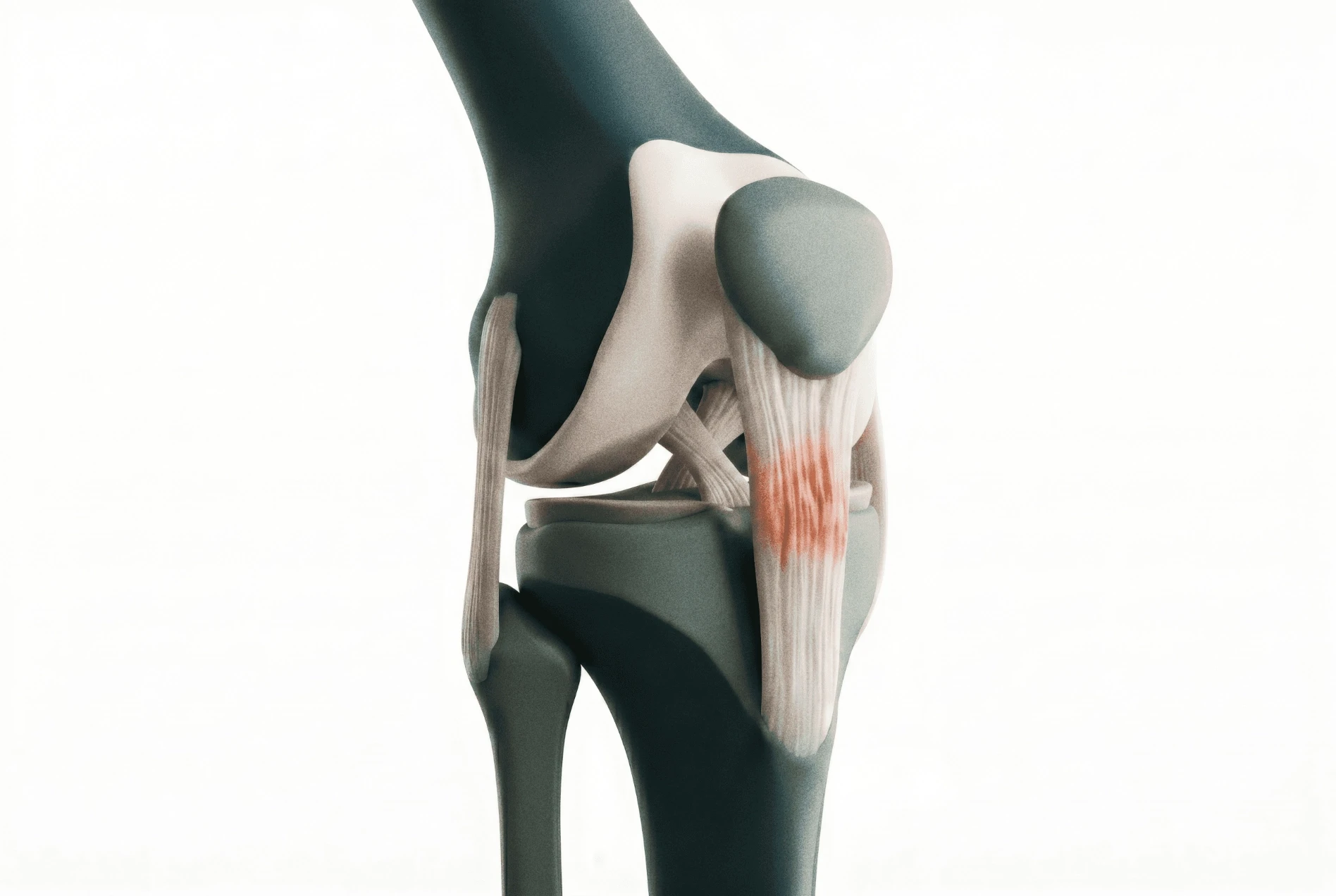
Patellar tendinopathy is an overuse condition affecting the tendon that runs from the bottom of the kneecap to the top of the shin. It's particularly common in athletes whose sport involves jumping, sprinting or sudden changes of direction, hence its other name, jumper's knee.
Despite the older term 'tendinitis', the condition isn't primarily an inflammatory one. It's a problem of how the tendon adapts to load, when demands repeatedly exceed what the tendon can recover from, structural changes develop and pain follows.
Tendinopathy can be a frustrating condition. It often responds slowly to treatment and tends to flare with activity changes. The good news is that with the right loading programme, the vast majority of cases settle without needing anything more invasive.
The pain is felt at the bottom of the kneecap, often very specifically over the tendon itself. You may notice:
Pain at the start of activity that sometimes eases as you warm up
Pain after activity, particularly the day following a hard session
Tenderness when pressing on the tendon
Stiffness after sitting or rest
A sense that the knee isn't quite up to its usual demands
Symptoms can be mild and grumbling for months, then flare more dramatically with a change in training or competition.
Diagnosis is largely clinical. The location of pain, the relationship to activity, and tenderness over the tendon usually make the diagnosis clear.
Imaging, particularly ultrasound or MRI, can demonstrate changes within the tendon but isn't routinely needed for diagnosis. It can be useful when symptoms aren't responding as expected, or when there's a question of an alternative diagnosis.
The assessment also looks at how you're loading the tendon, training volume, surface, footwear, technique, because these all influence what the right plan looks like.
Patellar tendinopathy responds to a structured loading programme, progressive resistance work that gradually rebuilds the tendon's tolerance. This is the cornerstone of treatment and is well-supported by evidence.
Activity modification, training adjustments and patience are all part of the picture. Recovery is measured in weeks to months rather than days. Surgery is rarely needed and is generally reserved for the small number of cases that don't respond to a properly delivered rehabilitation programme. Nev will work through what's right for your situation at your consultation.
Seek a specialist assessment if:
Knee pain at the bottom of the kneecap has persisted for several weeks
Pain is affecting your training or competition
You've tried rest and basic measures without lasting improvement
Symptoms are getting worse despite reducing activity
You want clarity on the diagnosis and a structured loading plan
Tendinopathy responds best to early, well-structured management. The longer it's left to drift, the longer it takes to settle.
