Quadriceps Tendinopathy
Overuse pain in the tendon above the kneecap, typical in athletes who jump or squat repeatedly. Managed with progressive strengthening.
AudienceAdult
RegionKnee
TypeNon-Surgical
Recovery3-6 months
Overuse pain in the tendon above the kneecap, typical in athletes who jump or squat repeatedly. Managed with progressive strengthening.
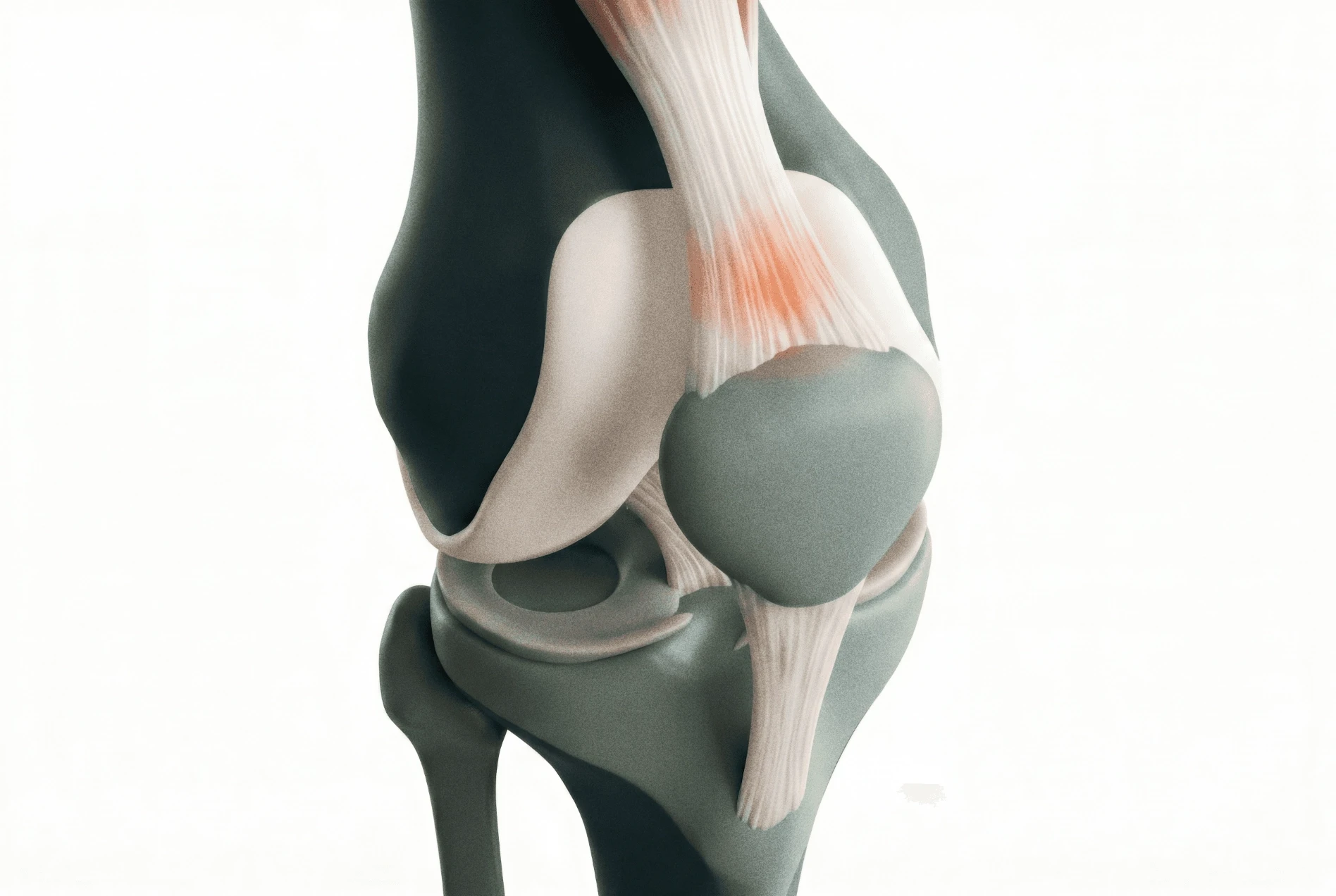
The quadriceps tendon is the strong cord that connects the quadriceps muscle group to the top of the kneecap. It transmits the considerable forces involved in straightening the knee.
Quadriceps tendinopathy develops when this tendon is repeatedly loaded beyond what it can recover from. It's particularly seen in athletes whose sports involve heavy squatting, jumping or rapid acceleration and deceleration, but it can also appear in less obviously athletic settings, particularly with sudden changes in activity level.
Like patellar tendinopathy, it's a condition of tendon adaptation rather than primary inflammation. The right treatment reflects this.
The pain is felt above the kneecap, often very specifically over the tendon. Common features include:
Aching or sharp pain just above the kneecap
Pain on squatting, jumping or going up stairs
Tenderness when pressing on the tendon
Stiffness after rest, easing with movement
Pain after activity, sometimes most noticeable the next day
Symptoms tend to follow training patterns: they're often worse after a hard session or competition and improve with appropriate management.
Diagnosis is clinical. The location of pain, the response to specific tests and the relationship to activity usually point clearly to the diagnosis.
Imaging is occasionally helpful, particularly when there's uncertainty about whether the problem is at the tendon, the muscle, or somewhere else. Ultrasound and MRI can both show changes within the tendon when needed.
The broader assessment considers training load, technique and overall conditioning, because these all influence both the cause and the right management plan.
As with other tendinopathies, structured loading work is the cornerstone of treatment. Progressive strengthening, particularly heavy slow resistance and eccentric loading, gradually rebuilds the tendon's capacity.
Adjustments to training and activity modification are usually part of the plan, but the goal is to keep you moving with a sensible loading dose rather than to stop activity completely. Recovery takes weeks to months. Surgery is rarely needed. Nev will work through what's right for your specific situation at your consultation.
Seek a specialist assessment if:
Pain above the kneecap has persisted for several weeks
Symptoms are affecting your training or sport
You've tried rest and self-management without lasting improvement
Pain is getting worse despite reducing activity
You want a clear diagnosis and a structured plan
Quadriceps tendinopathy responds well to the right rehabilitation programme, but it does take time, and the right plan is the one that suits your specific situation and goals.
