Accessory Navicular
An extra small bone on the inner side of the foot, sometimes causing pain. Often manageable with rest and orthotics; persistent cases may need surgery.
AudienceChild
RegionFoot & Ankle
TypeSometimes Surgical
RecoveryVariable
An extra small bone on the inner side of the foot, sometimes causing pain. Often manageable with rest and orthotics; persistent cases may need surgery.
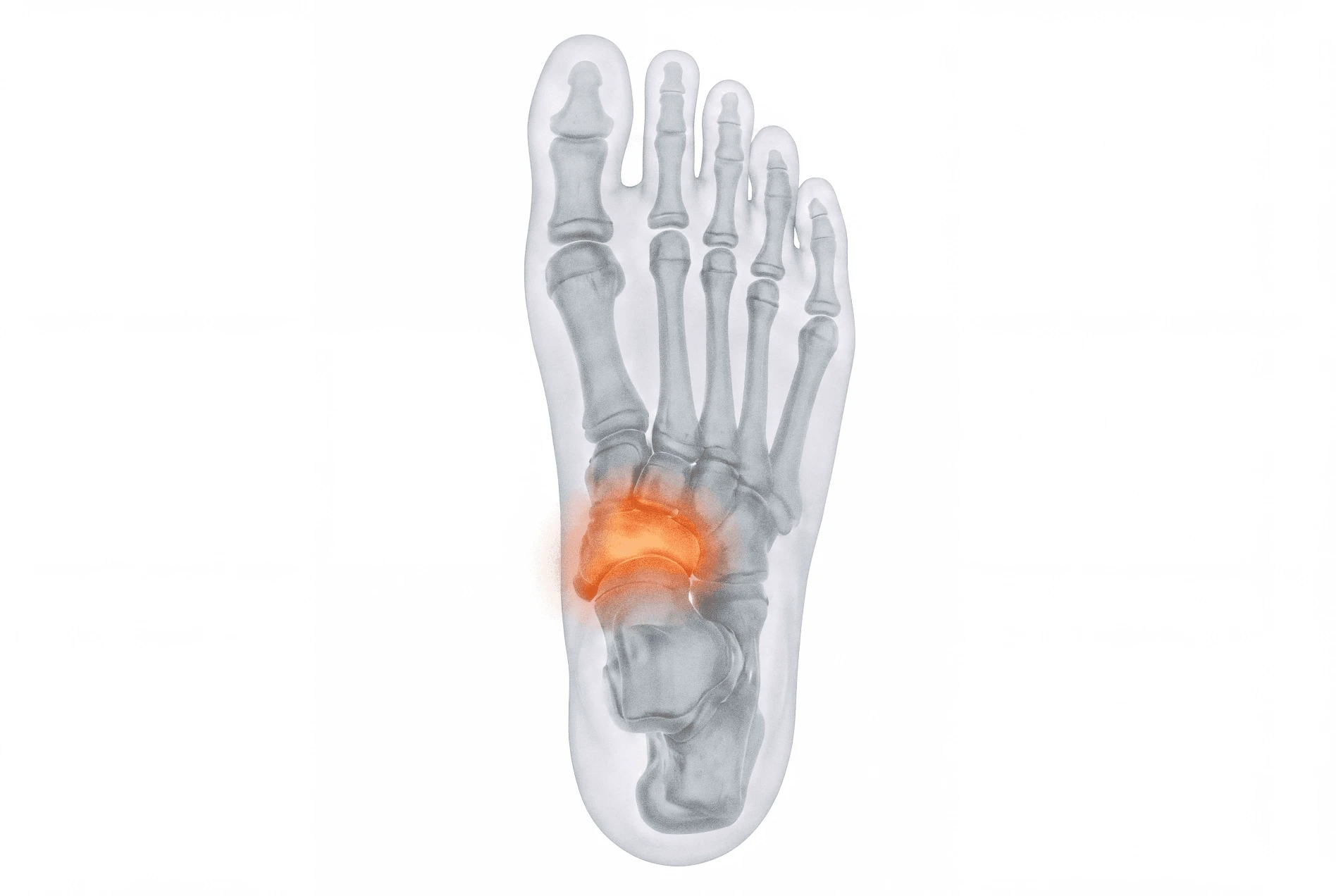
The navicular is one of the bones in the middle of the foot, on the inner arch. An accessory navicular is an extra small piece of bone that sits next to or attached to the navicular, present in roughly 1 in 10 people.
Most accessory naviculars cause no problems and the person never knows they have one. Some, however, become symptomatic: particularly during growth years, when the connection between the accessory bone and the main navicular can become irritated.
It's a recognised cause of inner-foot pain in active children and adolescents and is sometimes mistaken for other foot conditions.
Common features when symptomatic include:
Pain on the inner side of the midfoot
A visible or palpable bump on the inside of the arch
Pain with activity, particularly running and jumping
Sometimes discomfort with shoes pressing on the area
Redness or tenderness over the bump in some cases
Symptoms often appear or worsen during growth phases or after an increase in activity.
Examination usually identifies the prominent bony point and tenderness in the typical location.
X-rays confirm the presence and pattern of the accessory navicular: there are different types depending on how the extra bone is connected. MRI is occasionally useful when there's concern about associated changes or when the picture isn't clear.
Assessment also considers the wider foot shape, since accessory navicular is sometimes associated with flexible flat feet.
Many symptomatic accessory naviculars settle with rest from aggravating activities, supportive footwear, orthotic insoles and sometimes a brief period of immobilisation. Most cases respond well to a thoughtful conservative approach.
When symptoms persist despite proper conservative management, surgical removal of the accessory bone is sometimes considered. The procedure is well-established and recovery is typically straightforward. Nev will work through what's right for your child at your consultation.
Seek a specialist assessment if:
Your child has persistent inner-foot pain
There's a visible prominent bump on the inside of the arch
Pain is interfering with sport or activity
Conservative measures haven't produced lasting improvement
You want a clear plan and to understand the options
Accessory navicular pain is a recognisable, treatable cause of foot pain in young people. The right early management often avoids the need for anything more invasive.
