In-toeing and Out-toeing
Variations in how the feet point during walking, common in young children. Most resolve naturally as the child grows.
AudienceChild
RegionFoot & Ankle
TypeNon-Surgical
RecoveryVariable
Variations in how the feet point during walking, common in young children. Most resolve naturally as the child grows.
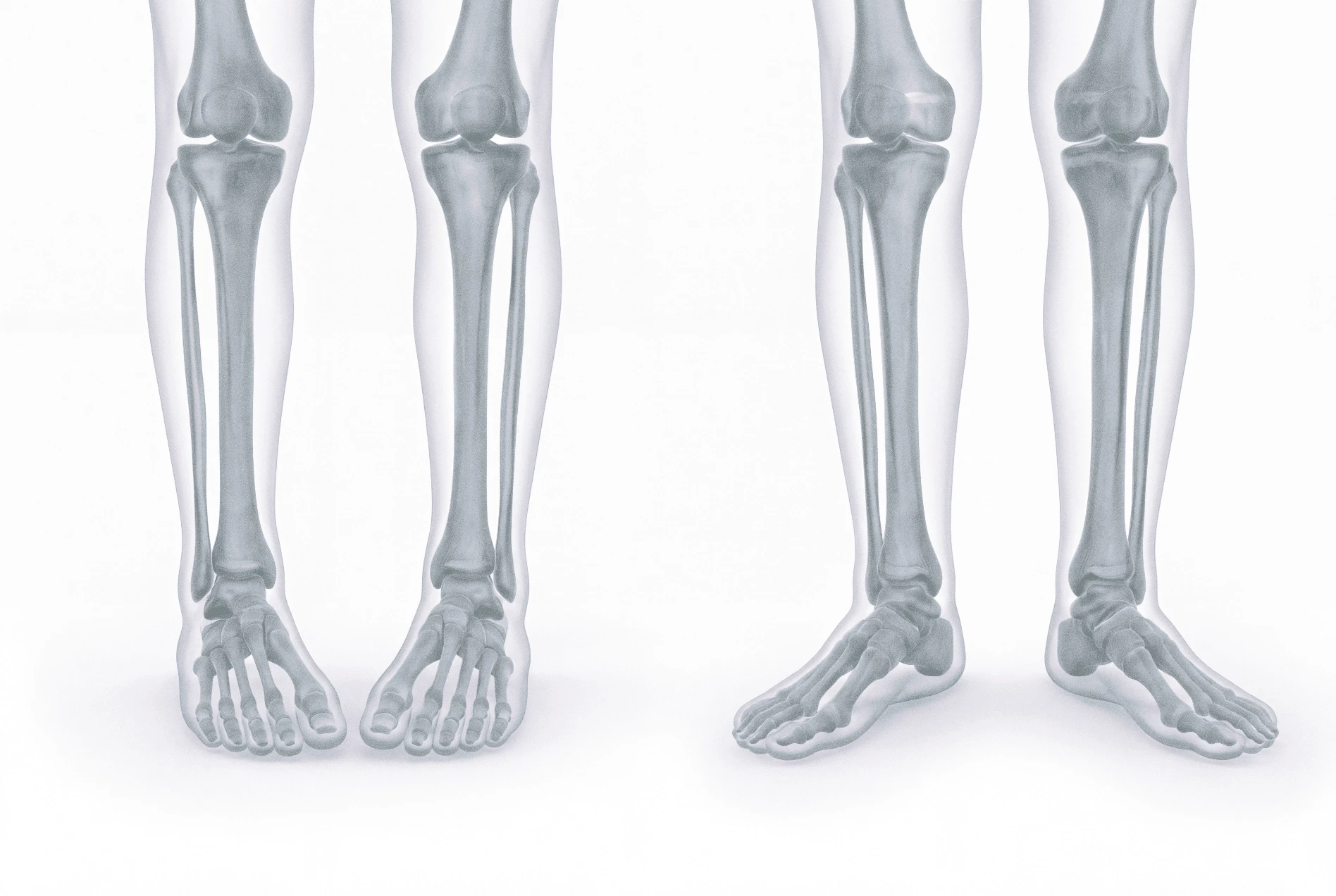
In-toeing, feet pointing inwards when walking, and out-toeing, feet pointing outwards, are common variations in walking pattern in young children. They reflect the rotational alignment of the leg and foot, which is still developing in childhood.
Most in-toeing and out-toeing is a normal part of development and resolves on its own as the child grows. The legs go through predictable patterns of rotational change in the first decade of life, and what looks unusual at one age often corrects naturally by the next.
The minority of cases that persist or are caused by an underlying anatomical issue may benefit from active assessment, but reassurance is usually what's needed.
Most children with in-toeing or out-toeing have no symptoms. The presentation is typically about appearance and gait:
Feet visibly turned inwards or outwards while walking
Sometimes tripping or falling, particularly with significant in-toeing
Awkward-looking gait pattern
Often picked up by parents, family or nursery staff
Rarely associated with pain in young children
Pain or functional difficulty in association with in-toeing or out-toeing is uncommon and warrants more careful assessment.
Examination establishes where the rotation is coming from: the foot, the lower leg, the upper leg, or a combination. The pattern is highly characteristic in most physiological cases.
Imaging isn't routinely needed for typical in-toeing or out-toeing in young children. It may be considered if there's asymmetry, persistence beyond expected ages or atypical features.
The assessment also looks for any underlying neuromuscular or hip issues that might present this way.
Most physiological in-toeing and out-toeing needs no active treatment, reassurance and observation through development are usually all that's needed. The legs reshape themselves with growth in the great majority of cases.
Special shoes, braces or twister cables, once commonly recommended, are no longer used because evidence shows they don't change the outcome. Surgery is very rarely indicated and is reserved for the small number of cases with persistent, marked deformity causing functional problems. Nev will work through this with you at your consultation if you'd like a clear assessment.
Seek a specialist assessment if:
In-toeing or out-toeing is marked, asymmetric or worsening
There's persistent tripping or falling beyond toddlerhood
Your child has pain or functional difficulty
There are concerns about overall development
You'd like reassurance and a clear understanding of what's happening
Most rotational variations resolve naturally, but a clear assessment provides reassurance and identifies the rare cases that need closer attention.
