Patellar Instability (First-time & Recurrent)
Dislocation of the kneecap, either after a single injury or as a recurring problem. Recurrent cases often need surgical stabilisation.
AudienceChild
RegionKnee
TypeSometimes Surgical
Recovery3-6 months
Dislocation of the kneecap, either after a single injury or as a recurring problem. Recurrent cases often need surgical stabilisation.
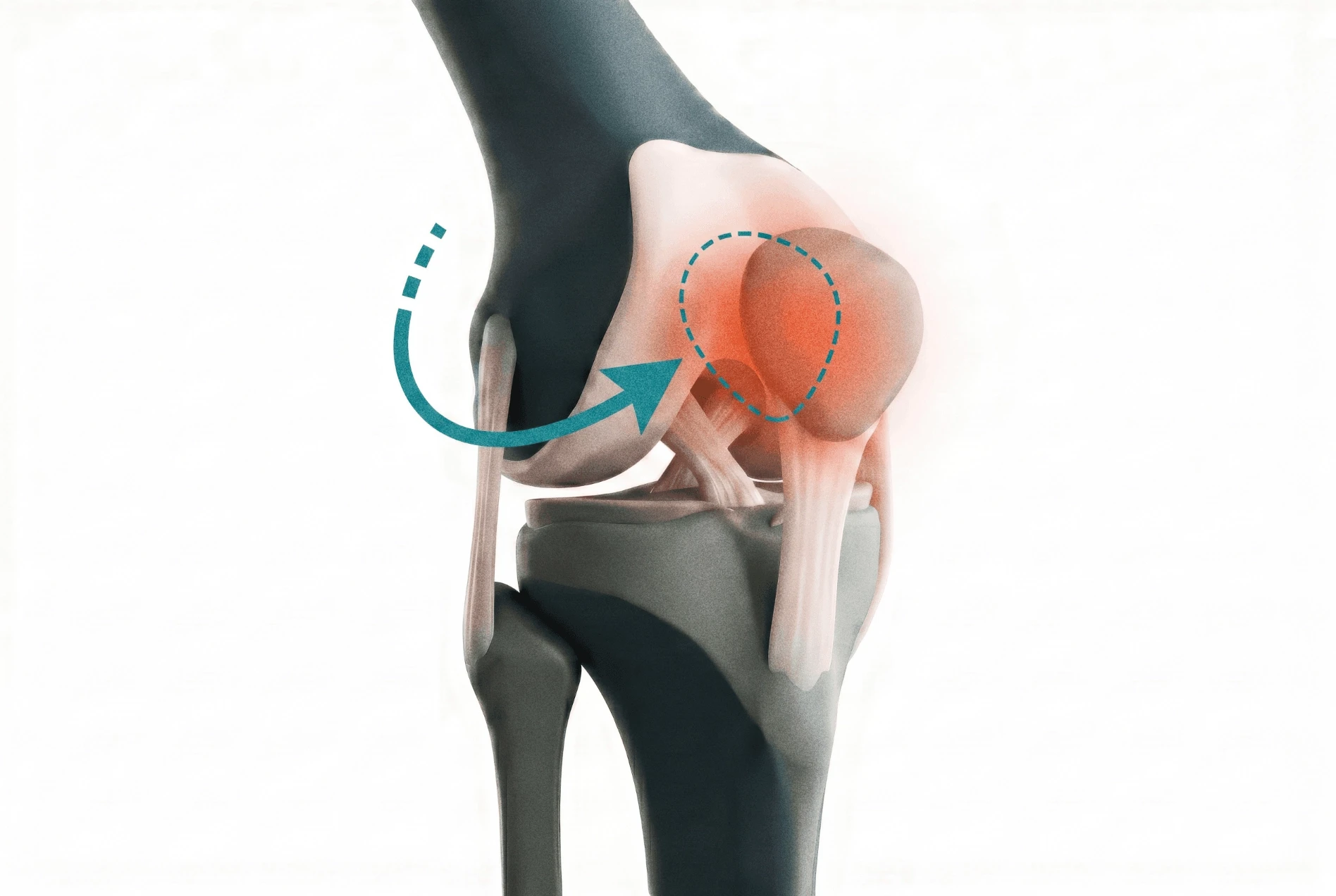
Patellar instability is when the kneecap doesn't stay reliably in its groove and slips out of place, usually to the outer side. In children and adolescents, this can happen as a single dramatic event after an injury, or as a recurrent problem where the kneecap keeps coming out.
Some children have anatomy that predisposes them to instability: a shallower groove, a higher-riding kneecap, or particular alignment patterns. Others develop instability after an initial dislocation that damages the supporting structures.
The pattern matters. A first-time dislocation is approached differently from recurrent instability, and the underlying anatomy guides which management is most likely to work.
Symptoms range from outright dislocations to a more subtle sense the kneecap can't be trusted. Common features include:
The kneecap visibly slipping out of place
A feeling of giving way, particularly on twisting
Pain at the front of the knee during or after episodes
Apprehension: fear that the knee will give way again
Swelling after dislocation events
Many young people start to avoid sports or activities they used to enjoy because they no longer trust the knee.
Examination is central. Specific tests assess kneecap stability and an experienced clinician can usually establish a clear picture.
Imaging plays an important role. X-rays look at alignment and bony anatomy. MRI assesses the soft tissues, particularly the medial patellofemoral ligament, and looks for cartilage damage that can occur during dislocations.
It's important to identify the underlying anatomical contributors, because these often need to be addressed in the management plan.
First-time dislocations are often managed without surgery: a structured rehabilitation programme, sometimes with bracing, allows the supporting structures to settle. Many young people don't have further episodes after a single dislocation managed this way.
Recurrent instability is a different matter. When dislocations keep happening despite rehabilitation, surgical stabilisation is usually considered. The specific procedure depends on the underlying anatomy. Nev will work through this with you and your child at your consultation.
Seek a specialist assessment if:
The kneecap has dislocated, even just once
The knee gives way unpredictably
Your child is avoiding activities because they don't trust the knee
Episodes are becoming more frequent
You want a clear picture of why this is happening
Recurrent instability rarely settles by itself. Early, considered assessment opens up the most options for getting your child back to full activity.
