Supracondylar Humerus Fracture
A fracture just above the elbow, one of the most common childhood elbow injuries. Displaced fractures usually need surgical pinning.
AudienceChild
RegionElbow
TypeSometimes Surgical
Recovery6-8 weeks
A fracture just above the elbow, one of the most common childhood elbow injuries. Displaced fractures usually need surgical pinning.
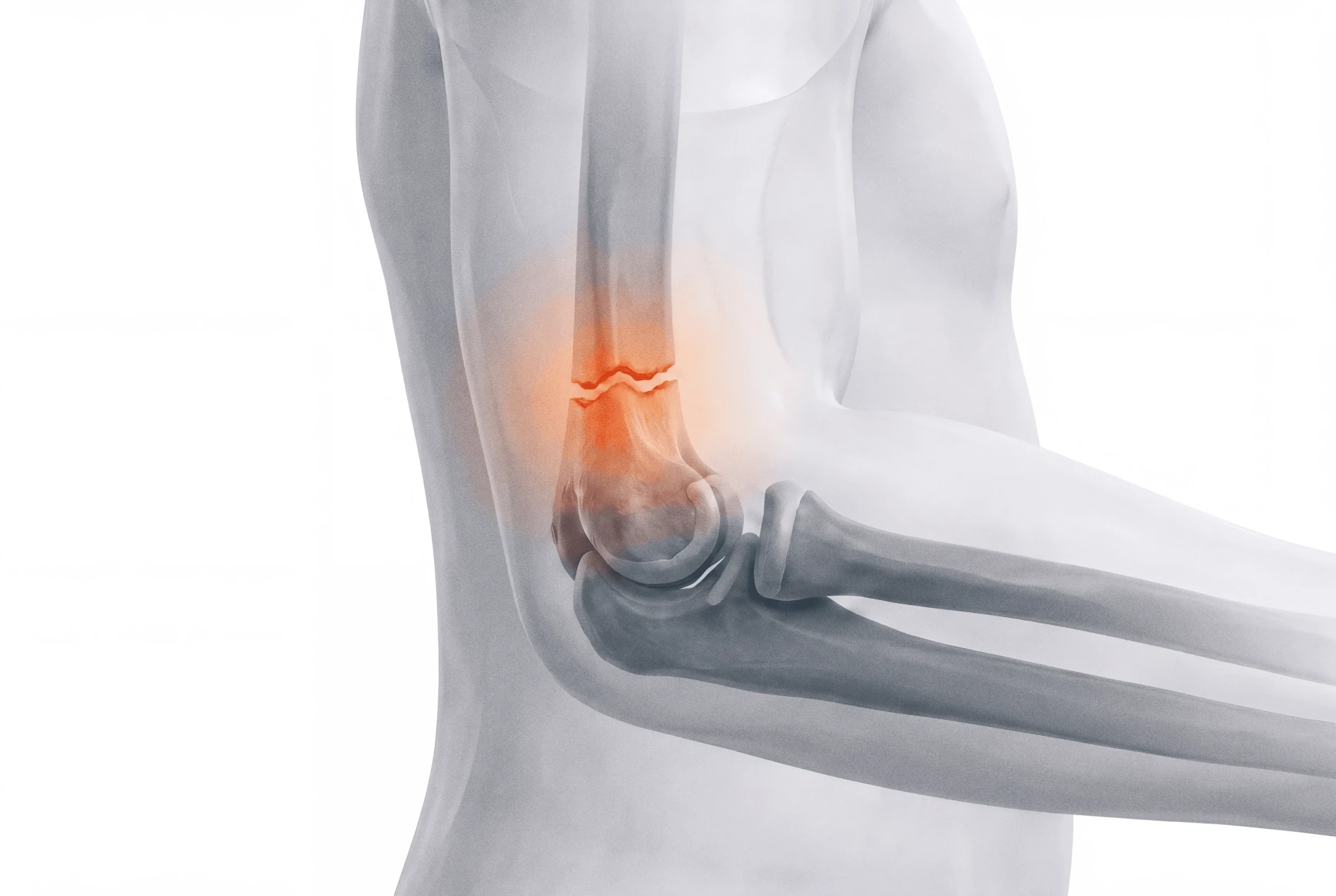
A supracondylar fracture is a break just above the elbow joint in the lower part of the upper arm bone (humerus). It's one of the most common elbow fractures in children, typically between the ages of 5 and 10, and almost always follows a fall onto an outstretched hand.
These fractures vary considerably in severity. Some are minimally displaced and stable; others are significantly displaced and may threaten nearby nerves and blood vessels.
The proximity of important nerves and vessels at the elbow means assessment of these structures is a critical part of evaluating any supracondylar fracture.
The presentation is usually clear after a fall:
Immediate severe pain at the elbow
Significant swelling, sometimes with bruising
Refusal to use or move the arm
Obvious deformity in displaced fractures
Pain that's clearly more than a simple bruise
If there are symptoms suggesting nerve or blood vessel involvement, numbness, weakness, paleness or coldness of the hand, urgent assessment is essential.
X-rays are the cornerstone of diagnosis. Specific views of the elbow show the fracture pattern and degree of displacement.
Examination assesses the surrounding nerves and the circulation to the hand: this is essential before and after any treatment. Different fracture patterns carry different risks of associated injury.
Decisions about treatment depend on the type of fracture, the degree of displacement, and any associated concerns. The full picture comes from combining the imaging with the clinical assessment.
Minimally displaced fractures often heal well in a cast. Significantly displaced fractures usually need surgical fixation: typically with small wires (pins) inserted under X-ray guidance, followed by a cast.
Recovery takes around six to eight weeks. Most children return to full activity once healed, though stiffness and arm carrying angle issues sometimes need attention afterwards. The right approach reflects the specifics of the fracture and your child's situation, Nev will work through this with you at your consultation.
Seek urgent assessment if:
Your child has fallen and has significant elbow pain or swelling
There's any deformity at the elbow
The hand looks pale, feels cold or has changed sensation
Movement of the fingers or wrist is reduced or painful
You're not sure whether the fracture is being managed appropriately
Supracondylar fractures range from straightforward to complex. The right early assessment and management make a substantial difference to outcomes.
