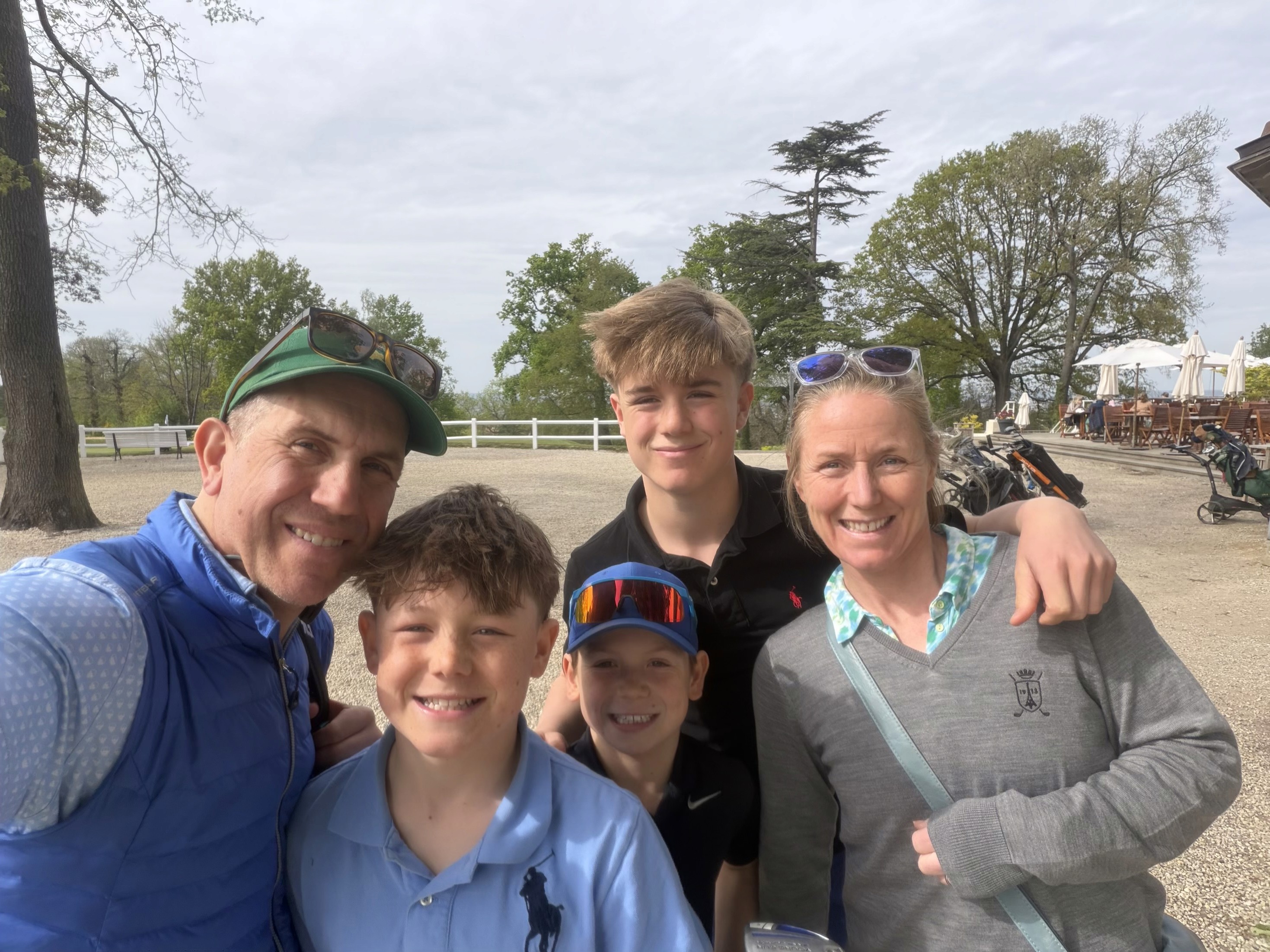
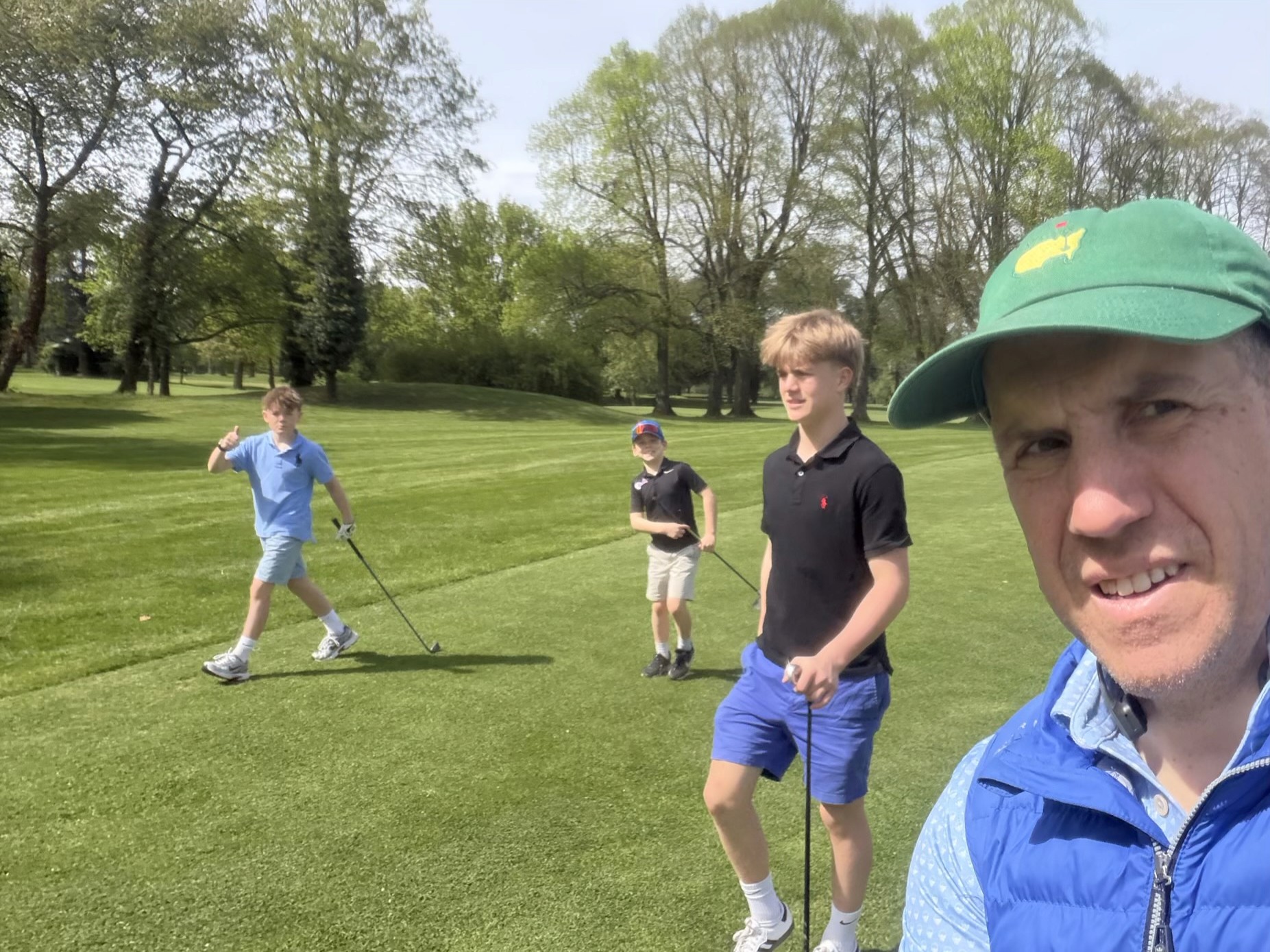
Caption: “Golf de St. Cloud - One of the better ideas we’ve had. Competitive doesn’t begin to cover it.”
Caption: “The best backdrop in golf. Possibly.”
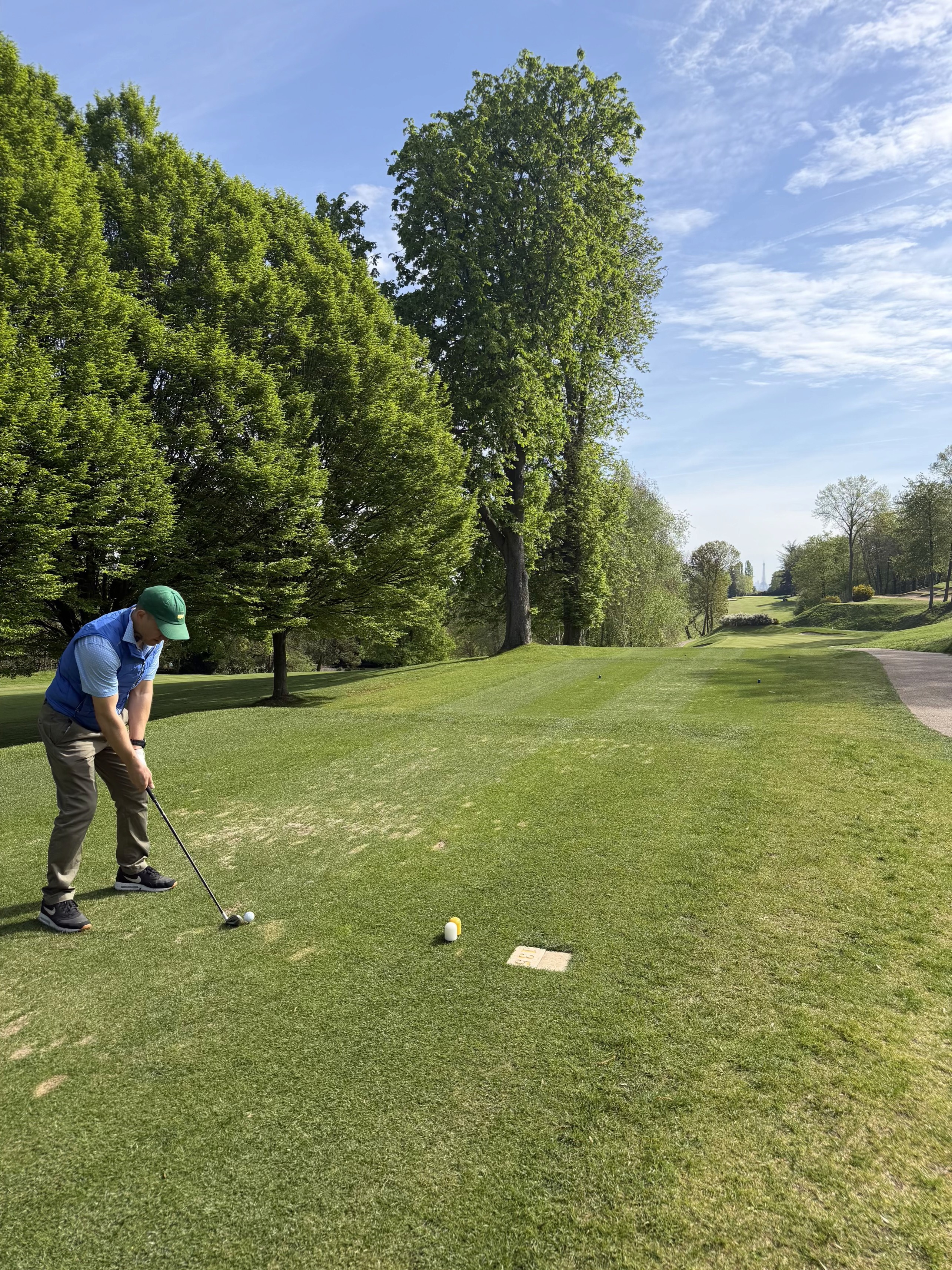
Golf de St. Cloud was a tree-lined, beautifully kept parkland course, and on a clear day you can see the Eiffel Tower from the tee. The boys brought their usual competitive energy to every hole. I brought my usual optimism. Lauren, not running, enjoyed the gardens and the considerably more peaceful experience of watching from the side.
If you find yourself in Paris with a free morning and a set of clubs, I cannot recommend it enough.
Back to the Calf : What You Need to Know
Since Lauren’s injury is something I see in runners, and something that is regularly mismanaged, it’s worth a practical note.
A “tennis calf” is one of those injuries that sounds fairly harmless… until you try to walk properly the next morning.
The classic story is a sudden sharp pain in the calf, often described as feeling as though someone has kicked or hit the back of the leg. Many patients actually turn around expecting to see somebody behind them.
The injury usually involves a strain or small tear of the medial head of the gastrocnemius muscle, the large calf muscle that crosses both the knee and ankle joints. It commonly occurs when the knee is straightening while the ankle is forced upwards, essentially placing the calf under sudden stretch while it is contracting. Explosive movements, pushing off, lunging or changing direction are typical triggers.
Symptoms can vary from mild tightness through to significant pain and bruising. Some patients can continue walking with a limp, while others struggle to weight bear comfortably for several days. Swelling and stiffness often worsen over the first 24–48 hours, particularly if the leg is not rested early on.
One of the important jobs during assessment is distinguishing a tennis calf from other conditions that can present in a similar way. Occasionally an Achilles tendon injury, a plantaris rupture or even a deep vein thrombosis (DVT) can mimic the symptoms. If the calf becomes increasingly swollen, hot, red or associated with chest symptoms or breathlessness, urgent medical review is important.
The good news is that the vast majority of tennis calf injuries settle well without surgery. Early management focuses on relative rest, compression, gentle movement and gradually rebuilding calf strength. In the very acute phase, aggressive stretching is often unhelpful and can irritate the healing tissue further. As pain settles, a structured rehabilitation programme becomes key, particularly eccentric calf strengthening, balance work and progressive return to loading.
Recovery time depends on the severity of the injury. Mild strains may improve within a couple of weeks, whereas more significant tears can take six to twelve weeks to fully settle. One of the common mistakes is returning to sport too quickly because day-to-day walking feels comfortable before the calf has regained its true power and endurance.
For runners and active patients, I often explain that the calf acts rather like the “engine room” of lower limb function. If it is weak, stiff or poorly rehabilitated, other areas such as the Achilles tendon, hamstrings, knee or plantar fascia can start compensating and become overloaded themselves.
With sensible rehab and a graduated return to activity, most people recover fully and get back to sport without long-term problems.
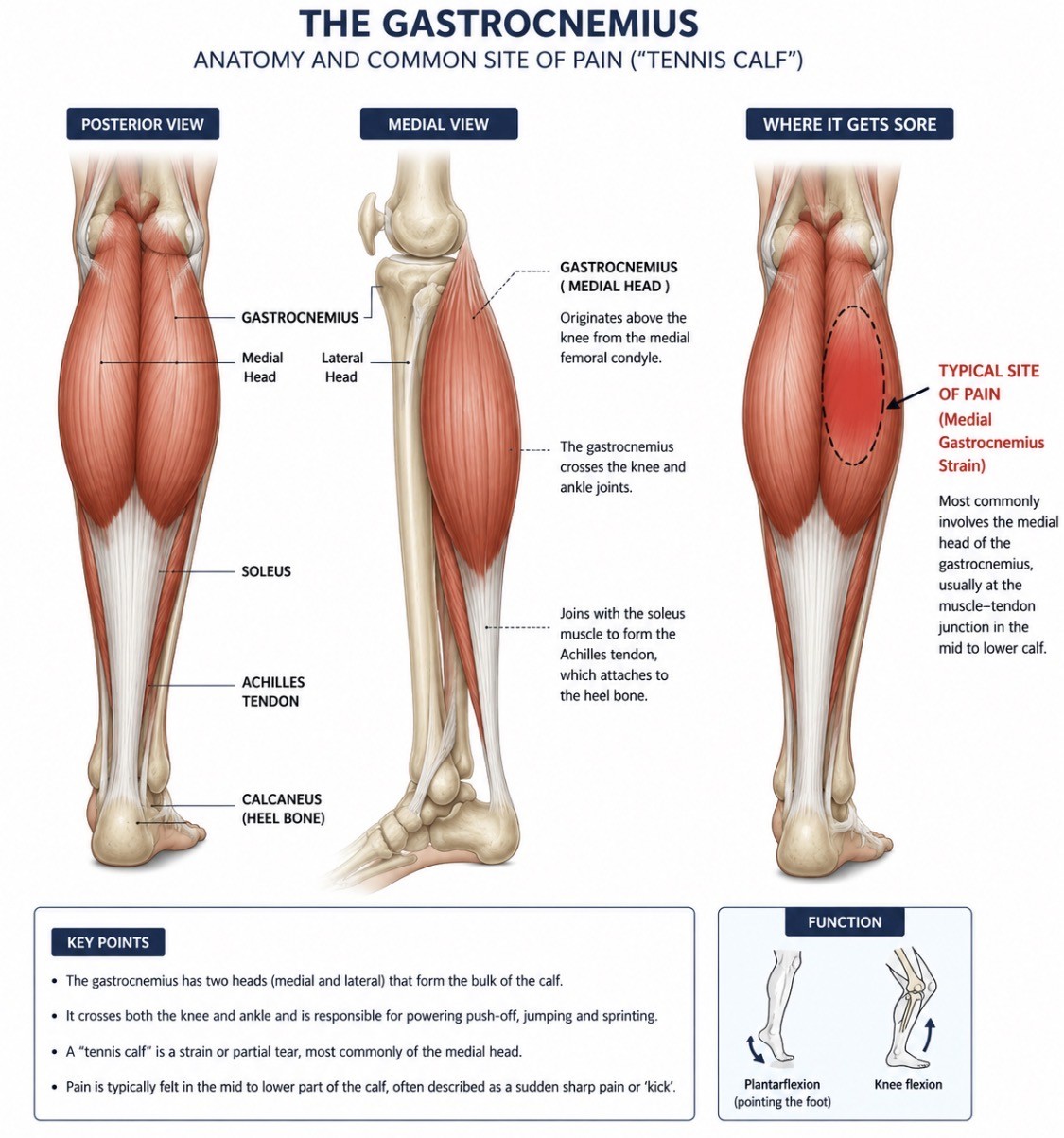
The gastrocnemius crosses both the knee and ankle, which makes it uniquely vulnerable under running load. Fatigue, a sudden increase in pace or mileage, and tight calves from accumulated training are all contributing factors. The final weeks of marathon prep when runners are doing their sharpest, fastest sessions are a particularly high-risk window.
Treatment — PEACE & LOVE
The old RICE protocol has been updated. Current evidence supports:
In the first 72 hours — PEACE: Protect the leg, Elevate it, Avoid anti-inflammatories in the early phase (they can impair natural healing), Compress, and Educate yourself about realistic recovery.
After that — LOVE: Load the calf progressively as pain allows, stay Optimistic (anxiety genuinely slows recovery), maintain Vascularisation through low-impact cardio like cycling or swimming, and follow a structured Exercise programme back to running.
The most important thing: don’t rush back. A Grade 2 calf tear needs 3–6 weeks of proper rehabilitation. Athletes who skip this step almost always end up back in clinic with a worse injury.
When to get it checked: if you can’t weight-bear, if there’s a visible gap in the calf muscle, or if swelling is severe, please seek assessment , also a DVT can present very similarly and needs to be ruled out.
Home
Caption: “We came for a marathon. We got more than we bargained for in the best possible way.”
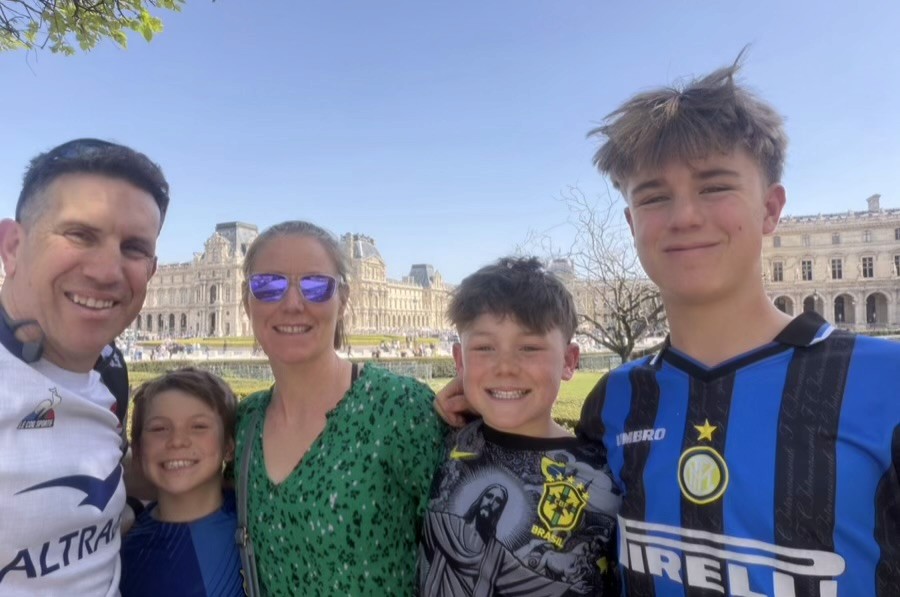
We came home with a mixed bag. Pride in Pete’s race. Disappointment for Lauren. Gratitude for a city that more than delivered on everything else. And a quiet reminder that sport, at its best, doesn’t just test the body it tests character.
Lauren’s calf gets the rehabilitation it deserves. Paris gets added to the list of unfinished business.
She’ll be back.