What Parents Need to Know About Growing Pains
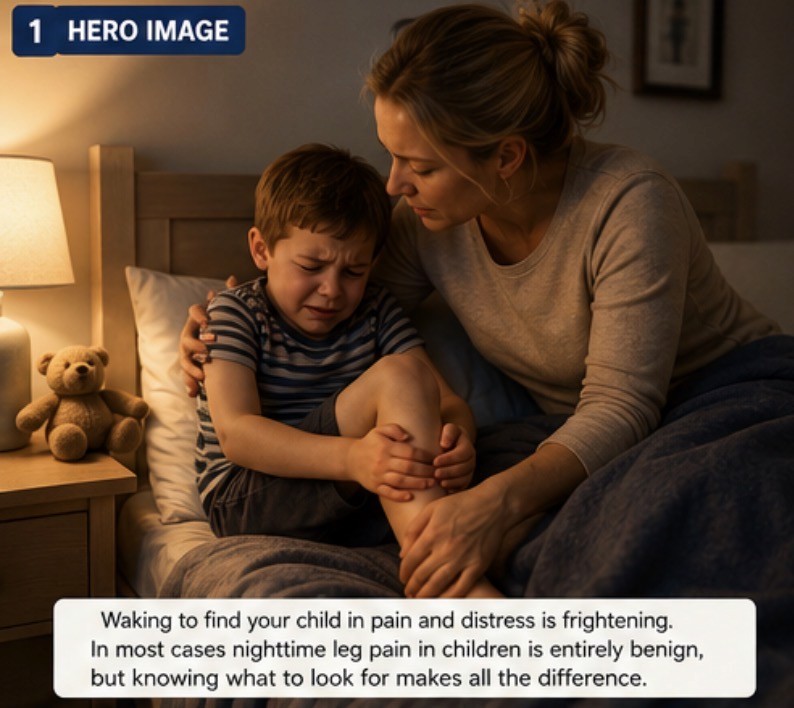
Waking to find your child in pain and distress is frightening. In most cases nighttime leg pain in children is entirely benign, but knowing what to look for makes all the difference.
Also from Mr Davies: Why are my child’s joints clicking?, one of the most-read children’s orthopaedic blogs in the UK.
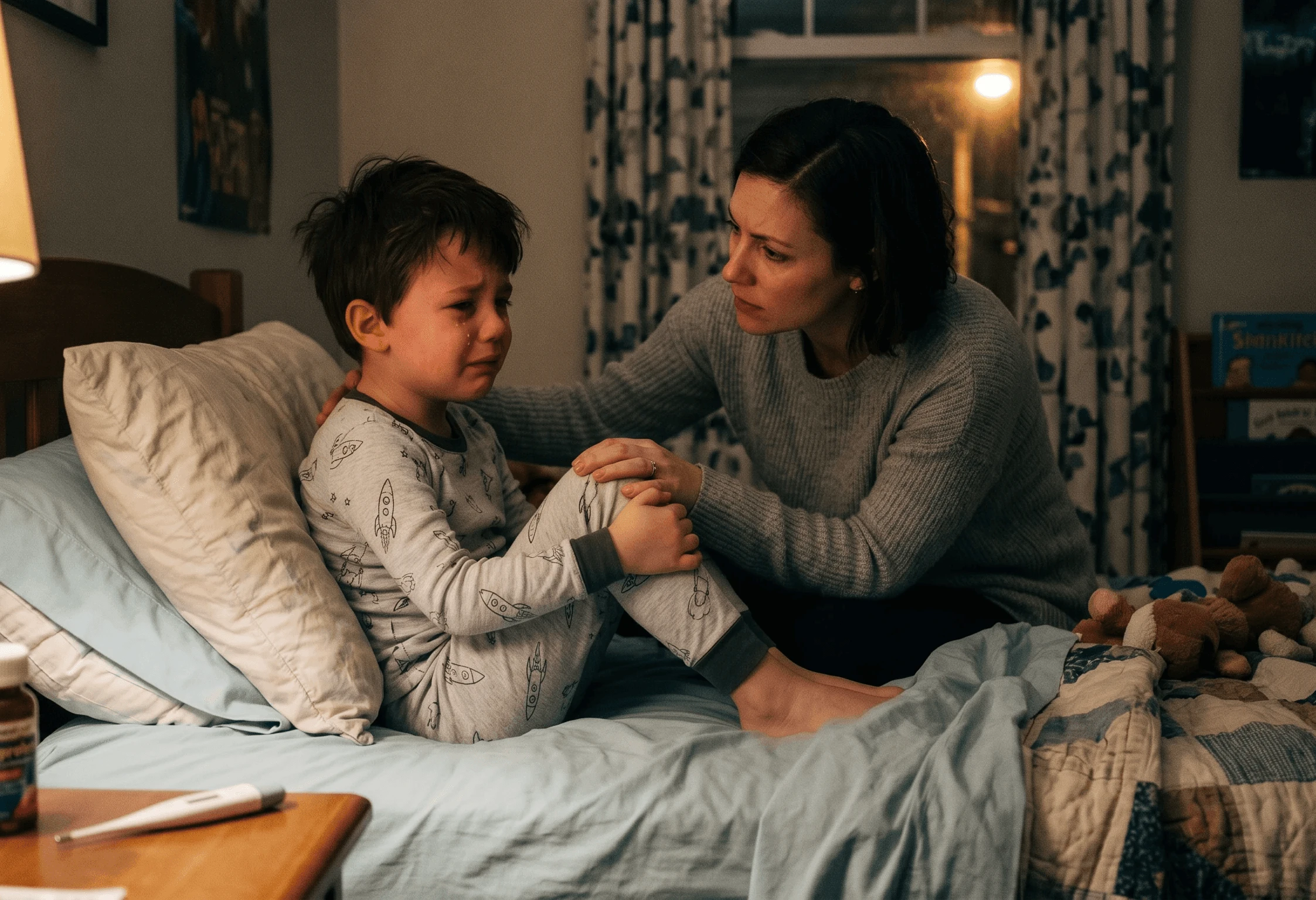
It’s just past midnight. Your child is crying out from their bedroom. You rush in to find them clutching their legs, genuinely distressed. You check them over and can’t find anything wrong. You rub their legs, you comfort them, eventually they settle. And by morning they’re bouncing off the walls as if nothing happened.
If that sounds familiar, you’re not alone. This is one of the most common scenarios parents describe when they come to see me, and it almost always has the same explanation.
What your child is experiencing is almost certainly what we call growing pains. They are real, they are common, they are not dangerous, and there are things you can do right now to help. But there are also some important warning signs that mean leg pain at night is something other than growing pains, and those are the situations you need to know about.
Here’s everything you need.
So What Are Growing Pains?
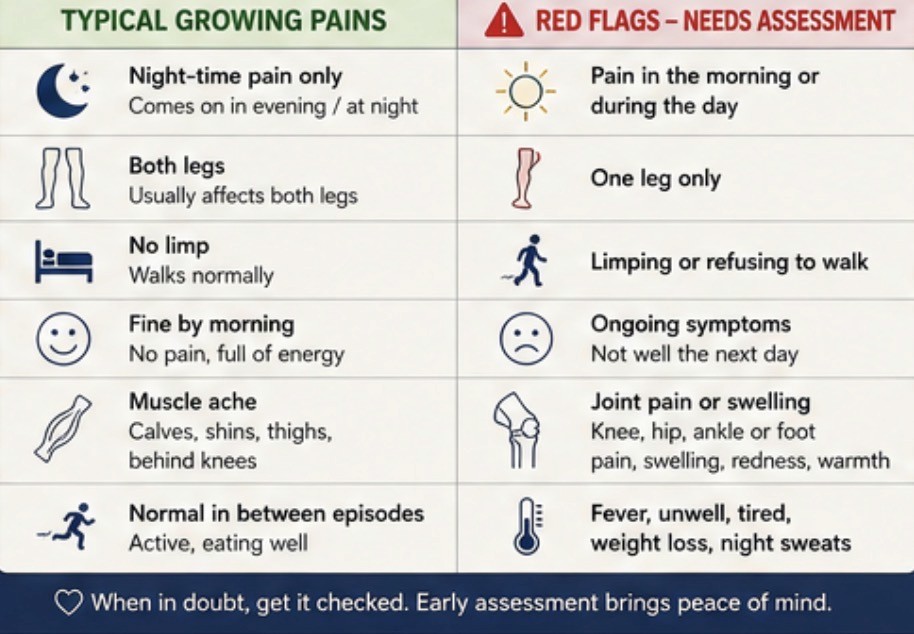
Growing pains are episodes of aching, throbbing, or cramping pain in the legs that occur in children, most commonly between the ages of 3 and 12. They are almost exclusively a night-time phenomenon. The pain typically comes on in the evening or wakes the child in the first few hours of sleep, can last anywhere from a few minutes to a couple of hours, and then disappears completely. By morning, the child is pain-free and entirely normal.
That last point is actually one of the most important diagnostic features. If your child wakes up in pain, or limps in the morning, that is not growing pains.
They affect up to 40% of children at some point, which means they are genuinely very common. They tend to come and go over months or even years, with pain-free stretches of days or weeks in between. Some children get them frequently; others have only occasional episodes.
And despite the name, growing pains are almost certainly not caused by bones growing. The name has stuck, but it is misleading.
Where Does the Pain Occur?
This is important, because the location of the pain is one of the key things that helps distinguish growing pains from something that needs investigation.
Growing pains are typically felt in the muscles, not the joints. The most common sites are:
The calves
The shins
The front of the thighs
Behind the knees
Both legs are usually affected, though not necessarily at the same time.
If your child is pointing to a specific joint (a knee, a hip, an ankle, or a foot) and saying the pain is there, that is not the typical pattern for growing pains and it warrants a closer look.
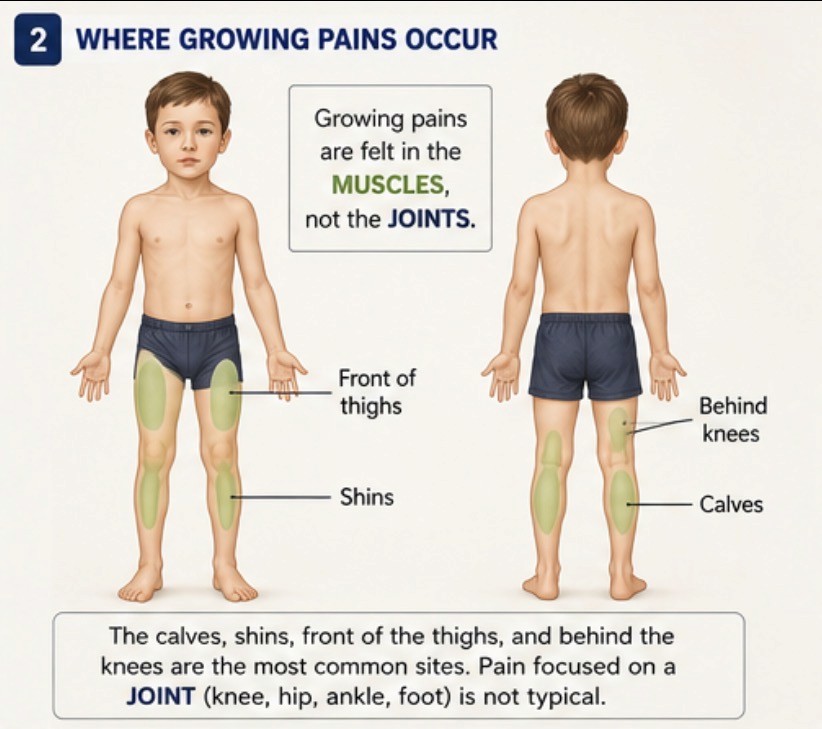
Growing pains are felt in the muscles, not the joints. The calves, shins, front of the thighs, and behind the knees are the most common sites. Pain that is focused on a joint is not typical of growing pains and deserves assessment.
What Actually Causes Them?
This is a question I’m asked almost every time, and the honest answer is that we don’t fully know.
What we do know is that it is not the physical act of bones growing that causes the pain. Research has not supported that theory, despite the name.
The most widely accepted current thinking is that growing pains are a form of muscle fatigue, possibly combined with a lower pain threshold in some children. Children who have had an unusually active day (lots of running, jumping, sport, or even just a long walk) are more likely to have an episode that night. The muscles ache in the same way an adult’s legs might ache after an unusually long day on their feet, but in some children this manifests as genuine pain rather than just tiredness.
Hypermobility (where a child has naturally flexible or loose joints) also seems to increase the likelihood. Children with hypermobility often work their muscles harder during the day to stabilise their joints, which may contribute to the night-time aching.
Vitamin D deficiency has been suggested as a possible contributing factor in some children, though the evidence is not yet conclusive. If your child has frequent and severe episodes, it is worth mentioning this to your GP.
How to Help Your Child During an Episode
When your child wakes in pain, the following approaches help most children. You don’t need to do all of them, try what works for your child and stick with it.
Gentle massage of the affected area is consistently the most effective immediate relief. Use firm but not harsh pressure along the calf and thigh muscles. Many parents find this settles their child within a few minutes.
Warmth: a warm compress or heat pack placed over the painful area can provide significant comfort. A hot water bottle wrapped in a towel, or a microwaveable heat pad, works well. Warmth relaxes the muscle and eases the ache.
Gentle stretching of the calf and hamstring muscles can help, particularly if the child is old enough to cooperate. A simple calf stretch against a wall or a gentle hamstring stretch while sitting on the bed can reduce the intensity of an episode.
Over-the-counter pain relief such as paracetamol or ibuprofen can be used if the pain is significant and the other measures aren’t settling things quickly. Follow the age and weight-appropriate dosing on the packaging.
Reassurance and physical comfort genuinely matter. Being held, stroked, and told calmly that this will pass helps regulate a frightened child. The pain is real, but it is not dangerous, and your presence makes a difference.
Most episodes settle within 30 to 60 minutes. The child then sleeps normally and wakes with no residual pain or stiffness.
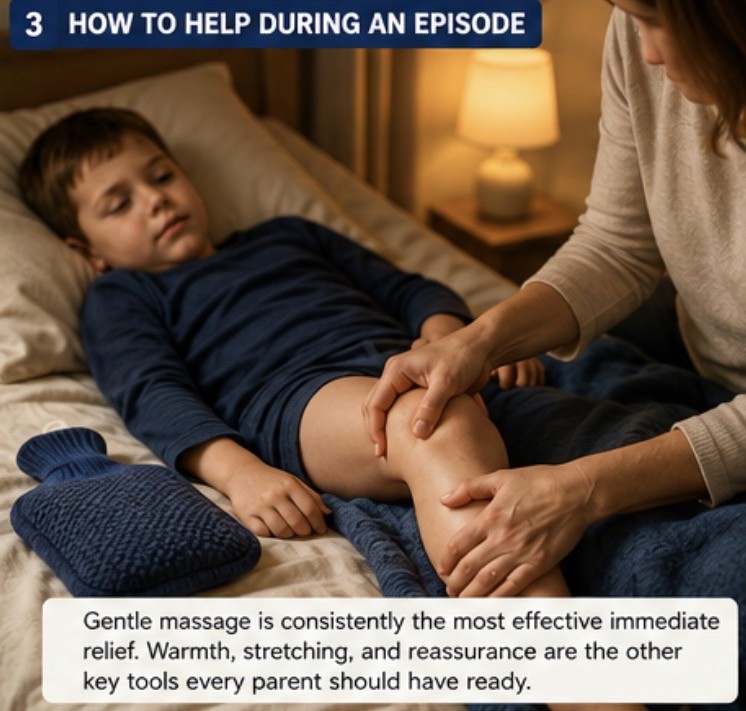
Gentle massage is consistently the most effective immediate relief during a growing pain episode. Warmth, stretching, and reassurance are the other key tools every parent should have ready.
When Is It Not Growing Pains?
This is the most important section of this blog. Please read it carefully.
Growing pains have a very specific pattern. When the pain doesn’t fit that pattern, it is important not to assume it’s still growing pains and wait for it to pass. There are conditions that can mimic growing pains but that need proper diagnosis and treatment.
Seek medical advice promptly if you notice any of the following:
The pain is present in the morning or during the day. Growing pains are almost exclusively nocturnal. A child who wakes limping, or who complains of leg pain during the day, needs to be assessed.
The pain is focused on a specific joint. Growing pains are felt in the muscles. Pain in a knee, hip, or ankle (particularly if that area is also swollen, warm, or red) is not growing pains.
There is swelling, redness, or warmth anywhere in the leg. This is a red flag that needs same-day or urgent assessment.
Your child is limping or refusing to walk. Growing pains do not cause a limp. A child who is limping needs to be seen.
The pain is always in one leg. Growing pains usually affect both legs, though not always simultaneously. Consistently one-sided pain deserves investigation.
Your child has a fever alongside the leg pain. Fever with limb pain can indicate infection, including bone infection (osteomyelitis) or septic arthritis, which are medical emergencies. Do not wait.
The episodes are getting more frequent, more severe, or lasting longer. True growing pains tend to be fairly consistent. A pattern that is escalating needs review.
Your child seems unwell in themselves, not just in pain. If the leg pain is accompanied by fatigue, weight loss, pallor, or a general sense that something isn’t right, please seek assessment promptly.
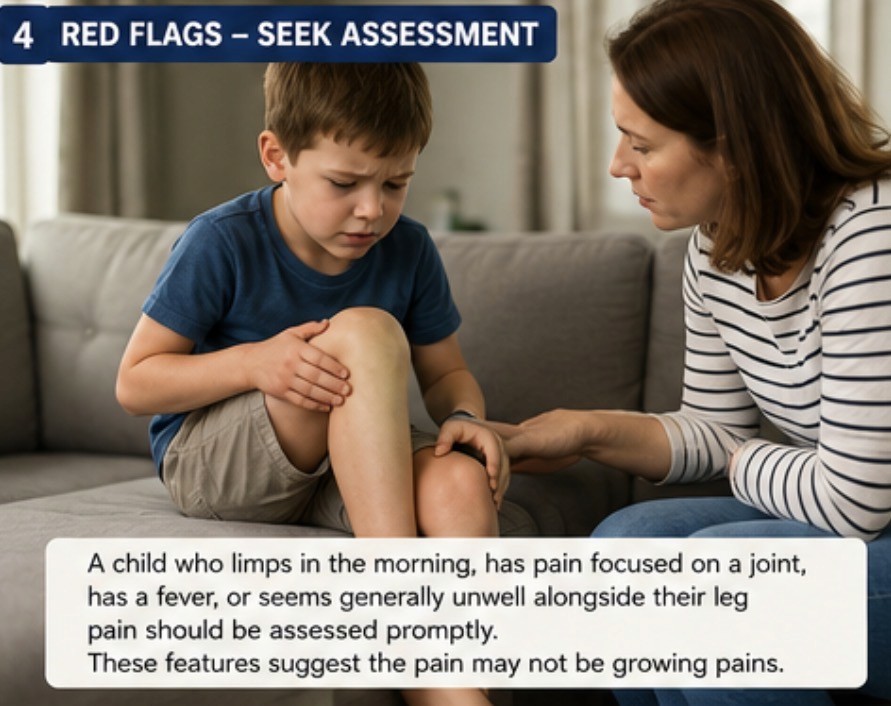
A child who limps in the morning, has pain focused on a joint, has a fever, or seems generally unwell alongside their leg pain should be assessed promptly. These features suggest the pain may not be growing pains.
Conditions That Can Mimic Growing Pains
Several conditions can present with night-time leg pain in children and are sometimes mistakenly attributed to growing pains for months before the correct diagnosis is made.
Juvenile idiopathic arthritis can cause joint pain and swelling that is worse in the morning, and may initially present as vague leg pain at night. Morning stiffness lasting more than 30 minutes is a key feature.
Hypermobility spectrum disorder causes genuine muscular aching, often worse after activity and at night, due to the extra work the muscles do to compensate for loose joints. This is common, manageable, and worth diagnosing properly rather than attributing indefinitely to growing pains.
Perthes disease and slipped upper femoral epiphysis (SUFE) are hip conditions that can refer pain to the thigh or knee, and are sometimes missed for this reason. Any child with hip pain, or knee pain without a clear knee cause, should have their hip examined.
Leukaemia and other bone conditions occasionally present with limb pain in children. This is rare, but it is one of the reasons that pain which is escalating, associated with general unwellness, or accompanied by night sweats and fever should always be taken seriously and assessed promptly rather than attributed to growing pains.
Restless leg syndrome produces an uncomfortable urge to move the legs rather than a specific pain, and can be confused with growing pains. It tends to run in families.
Vitamin D deficiency can cause generalised bone and muscle aching in children and is underdiagnosed in the UK, particularly in children who spend limited time outdoors or have darker skin. It is easily tested and easily treated.
Will My Child Grow Out of Growing Pains?
Yes, almost always. Growing pains typically resolve on their own as children get older, usually by the early teenage years. They don’t cause any lasting damage to the muscles, bones, or joints, and they don’t affect a child’s growth or development.
In the meantime, identifying triggers helps. Many parents find that particularly active days reliably precede episodes, and some moderate adjustment of activity, combined with good stretching in the evening and ensuring adequate hydration, can reduce the frequency.

Growing pains, though distressing in the moment, leave no trace by morning. A child who is completely well during the day, with no limp and no joint pain, is almost certainly experiencing a benign and self-limiting condition.
The Bottom Line
If your child wakes at night with aching legs in both limbs, is completely fine by morning, and has no fever, no limp, and no joint swelling, growing pains is the most likely explanation. Massage, warmth, and reassurance are your best tools, and the good news is this will resolve in time.
But if the pain is in the morning, focused on a joint, only in one leg, associated with fever or swelling, or your child seems unwell, please don’t wait. Get it checked. The conditions that mimic growing pains are mostly very treatable when caught early, and the peace of mind that comes from a proper assessment is worth more than any amount of late-night Googling.