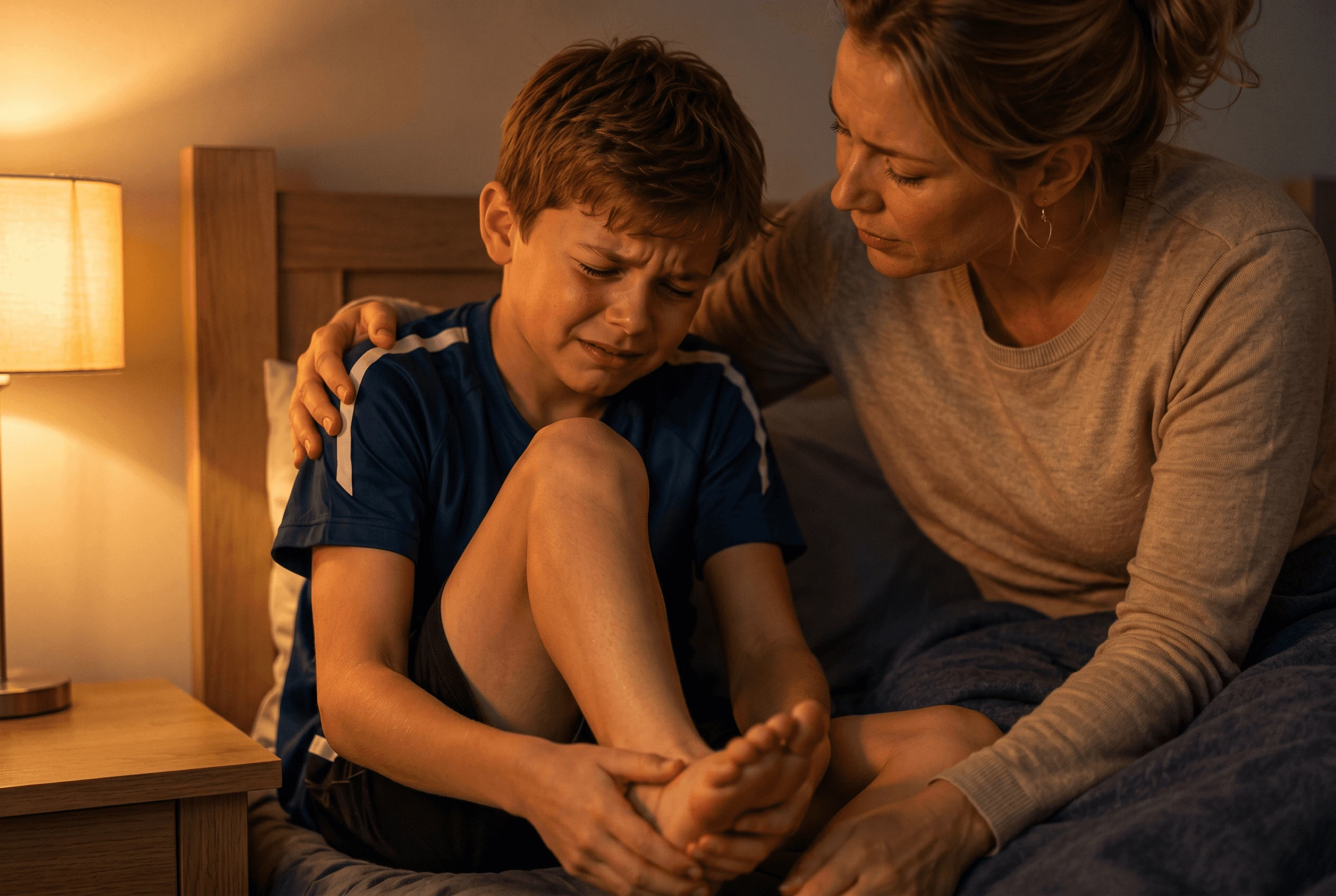
If your child has started limping after football, or hopping off the trampoline complaining their heel hurts, your mind probably jumps straight to the worst case. A fracture? Something serious? Let me put your mind at rest early: in active, growing children, heel pain is one of the most common things I see, and the usual cause is something called Sever's condition. It sounds alarming, but it is harmless, temporary, and it gets better on its own.
Here is what it actually is, why it happens, and the handful of signs that mean it is worth getting checked.
What is Sever's condition?
Sever's condition (the proper name is calcaneal apophysitis) is irritation of the growth plate at the back of the heel bone. Children have growth plates, which are areas of soft, developing cartilage, scattered around their growing skeleton. There is one at the back of the heel, and it is exactly where the big Achilles tendon from the calf muscle attaches.
When a child is active, that tendon pulls on the growth plate over and over again. In a child who is growing quickly, the bone can grow faster than the muscle can keep up, so the calf gets tight and tugs harder on the heel. The growth plate gets grumpy and inflamed, and that is the pain your child is feeling.
It is a bit like Osgood-Schlatter at the knee, just at the other end of the leg. If you have read our post on anterior knee pain in active children, the mechanism will feel familiar.
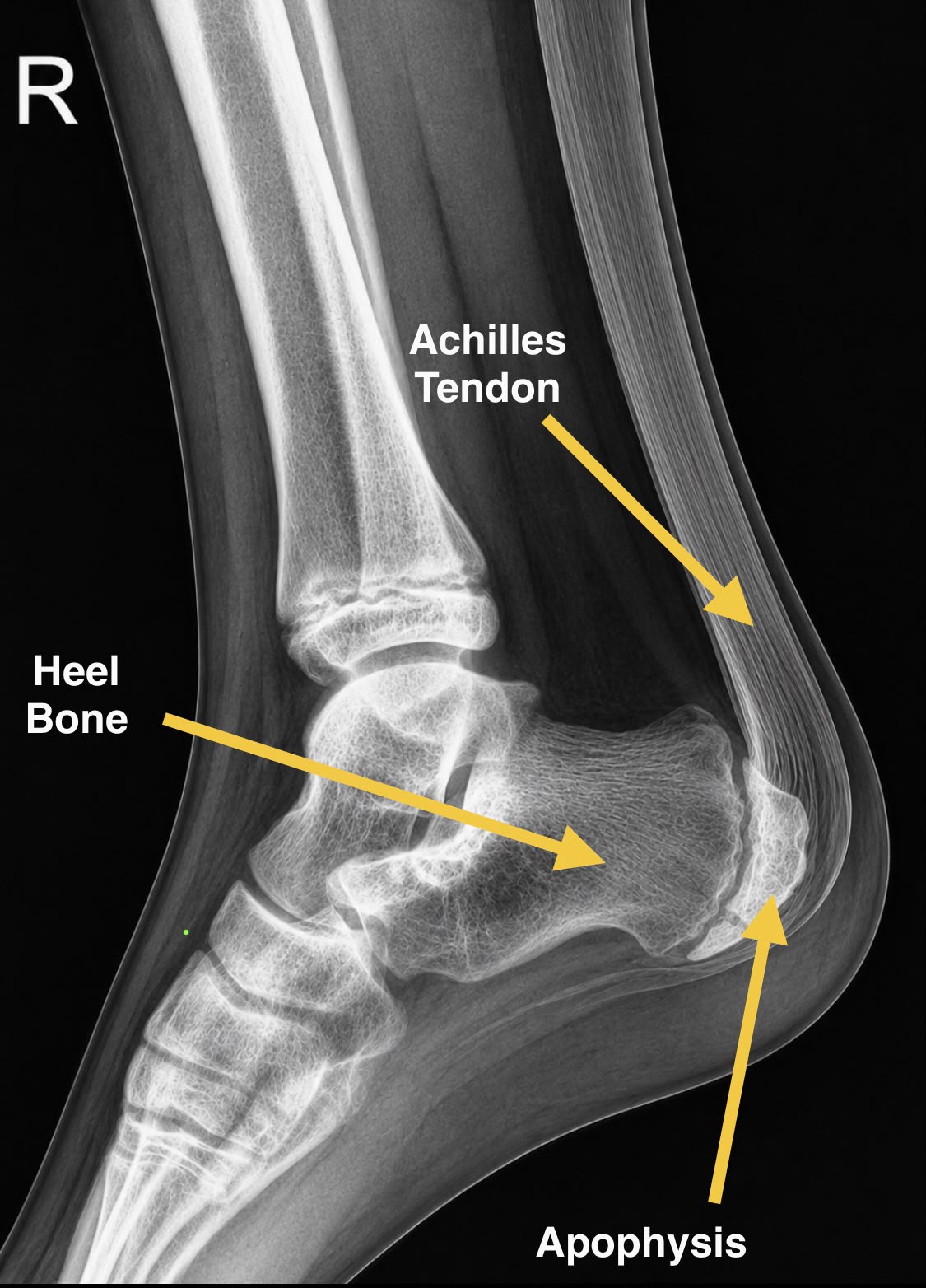
The growth plate (apophysis) sits at the back of the heel bone, right where the Achilles tendon pulls.
How old are children when they get it?
It tends to show up between the ages of 8 and 14, often right in the middle of a growth spurt. I see it most in sporty children: footballers, runners, gymnasts, dancers, and anyone who spends a lot of time sprinting, jumping or playing on hard surfaces. It is also more common at the start of a new season or after a sudden jump in training.
It often affects one heel, but it can happen in both.
What does Sever's condition feel like?
The classic picture is a child who:
Complains of pain at the back or sides of the heel
Hurts more during or after sport, and feels better with rest
Limps, or runs on their toes to keep weight off the heel
Says it is sore when you give the back of the heel a gentle squeeze
Has tight calf muscles
The pain usually builds up gradually rather than starting with one specific injury. If your child took a hard, sudden knock and the pain came on instantly, that is a different situation and worth getting looked at.
Will it cause any lasting damage?
No, and this is the bit I most want parents to hear. Sever's condition does not damage the bone, it does not cause arthritis later in life, and it does not leave any lasting problem. The growth plate eventually matures and fuses (usually around the age of 15), and once that happens the condition simply cannot occur any more. Your child grows out of it, quite literally.
How is it treated?
The good news is that almost all of this can be managed at home, and the approach is simple:
Ease off, do not stop completely. Your child does not need to give up sport entirely. The aim is to dial activity down to a level the heel can tolerate, then gradually build back up. Pushing through significant pain just keeps the growth plate irritated.
Stretch the calves. Tight calves are the single biggest driver here, so gentle, regular calf and Achilles stretches genuinely help. A simple wall stretch, held daily, makes a real difference.
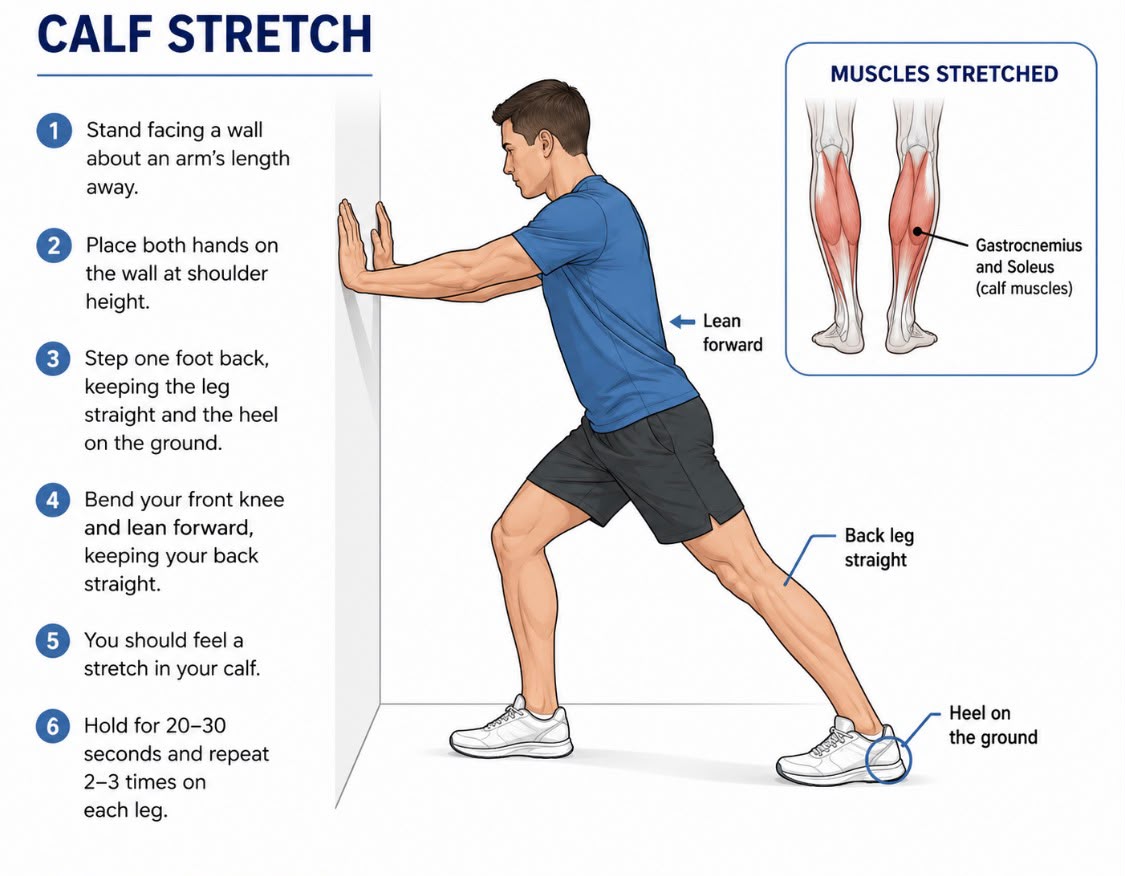
A simple wall calf stretch, held for 20 to 30 seconds and repeated a few times on each leg, eases the pull on the heel.
Cushion the heel. A soft gel heel cup or heel raise in both shoes takes some of the pull off the growth plate and often makes a real difference quite quickly.
Ice after activity. Ten minutes with an ice pack (wrapped in a tea towel) after sport settles the soreness.
Check the footwear. Worn out, flat or unsupportive shoes make it worse. Good supportive trainers matter.
Most children settle within a few weeks to a couple of months with this approach. It can flare up again during the next growth spurt, which is annoying but not a sign anything is wrong.
Does my child need an X-ray or a scan?
Usually not. Sever's condition is diagnosed from the story and a simple examination in clinic, and there is no scan that confirms it. I only arrange imaging if something does not quite fit the typical picture and I want to rule out another cause.
When should I actually worry?
This is the part worth reading twice. The vast majority of heel pain in children is harmless, but a few features mean you should get it checked properly rather than managing it at home:
Pain that wakes your child at night, or hurts even at complete rest
A heel that is swollen, red or warm to the touch
Your child feeling generally unwell, feverish or off their food alongside the pain
A limp that does not settle, or pain that is getting steadily worse despite resting
Pain that started suddenly with a specific injury
Pain that has not improved at all after several weeks of sensible rest and stretching
None of these mean something is definitely wrong, but they are the signals that say let a professional take a look rather than waiting it out.
The bottom line
Heel pain in a sporty, growing child is common, and Sever's condition is almost always the reason. It is harmless, it gets better on its own, and a bit of rest, stretching and a heel cup usually does the trick. Your child will grow out of it. Keep an eye out for the warning signs above, but for the most part this is one to reassure rather than panic about.
If your child's heel pain is dragging on, flaring badly, or you simply want the reassurance of a proper assessment, I am always happy to see them.