Osteoarthritis is still very commonly described as “wear and tear”.
Most patients have heard the phrase often early, sometimes casually, and usually without much explanation. Unfortunately, it’s also a phrase that creates fear, confusion, and a sense of inevitability.
As a knee surgeon, I rarely use it anymore. Not because osteoarthritis isn’t real or progressive, but because “wear and tear” doesn’t reflect how joints actually behave, and it often leads people to the wrong conclusions.
A much more accurate and helpful way to think about osteoarthritis is:
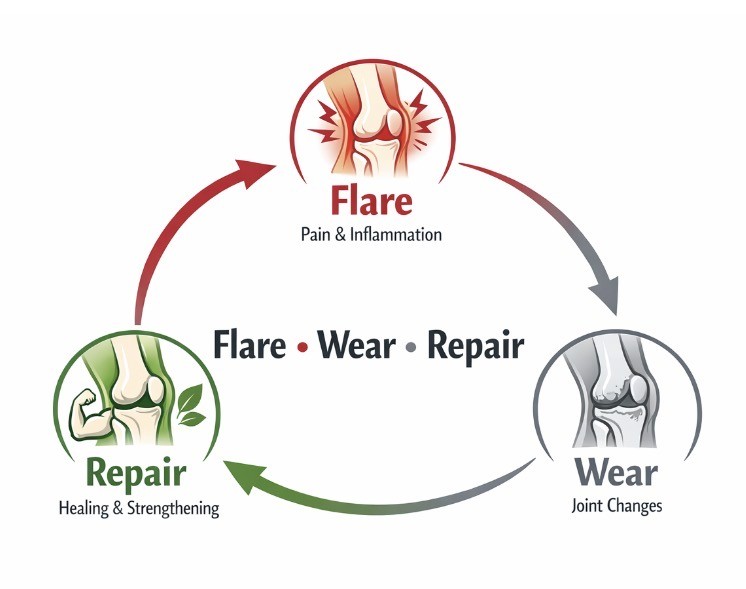
“Flare, wear and repair”
The problem with “wear and tear”
“Wear and tear” suggests a very specific story:
• that joints wear out like tyres
• that damage only goes in one direction
• that pain will steadily worsen no matter what
• that activity inevitably makes things worse
Understandably, patients then think:
“If I keep using my knee, I’ll just make it worse.”
But clinically and biologically that isn’t what we see because osteoarthritis is not a straight downhill slope
If osteoarthritis were simply mechanical wear:
• pain would steadily increase year on year
• scans would closely match symptoms
• rest would always help
• activity would always harm
In reality:
• symptoms come and go
• pain can fluctuate dramatically
• scans often look worse than the knee feels
• people can feel awful during one phase and much better a few months later
That tells us something important:
Osteoarthritis is dynamic, not static.
A better way to understand it:
“Flare, Wear and Repair”
🔥 Flare
A flare is when symptoms suddenly worsen and can be triggered by:
• a change in activity
• a knock or minor injury
• doing too much after doing too little
• illness, stress, or poor sleep
During a flare:
• the joint lining becomes irritated
• inflammation increases
• fluid may build up
• pain and stiffness worsen
• muscles disengage
Crucially, a flare does not mean the joint has suddenly deteriorated or “collapsed”.
⸻
⚙️ Wear
Yes — structural changes do occur over time and these may include:
• thinning of cartilage
• small areas of bone change
• altered joint shape
But this process:
• happens slowly
• varies enormously between people
• does not neatly correlate with pain
Many people with advanced changes on X-ray function remarkably well.
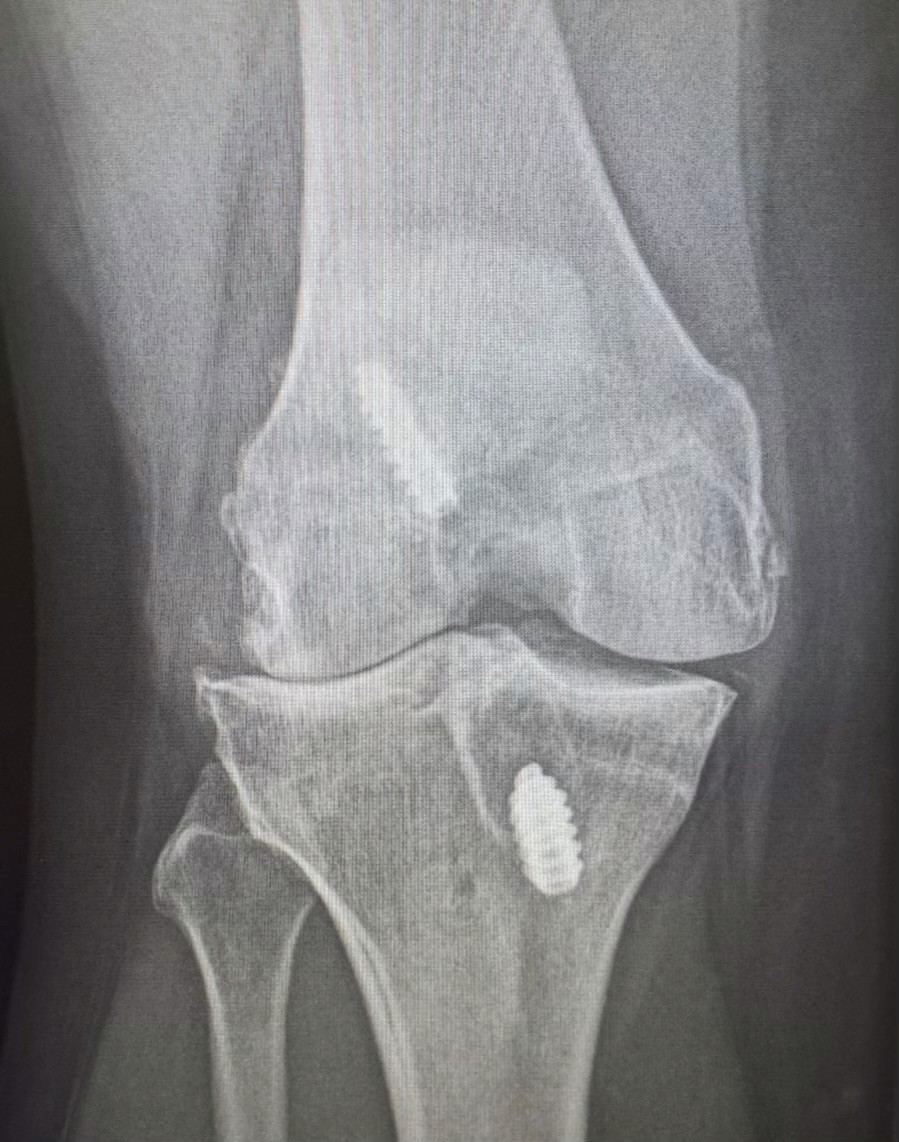
Others with relatively mild changes struggle more. Pain is influenced by far more than structure alone.
⸻
🔧 Repair
This is the part the “wear and tear” model completely misses.
Joints are living, adaptable organs:
• cartilage responds to load
• bone remodels
• muscles protect and stabilise
• inflammation can settle
With the right conditions:
• pain improves
• movement becomes easier
• confidence returns
Strength, movement, pacing, weight management, sleep, and education all actively support this repair and adaptation phase.
⸻
Why language really matters
How we explain arthritis changes how people behave.
If someone believes:
“My knee is worn out”
They often will :
• avoid movement
• lose strength
• gain weight
• fear activity
• worsen symptoms
If instead they understand:
“My knee flares, adapts, and can recover”
They are far more likely to:
• stay active
• manage flares calmly
• rebuild strength
• delay or avoid unnecessary intervention
⸻
What about scans and X-rays ?
Scans are snapshots, not predictions.
They show:
• structure, not pain
• anatomy, not function
• change, not destiny
An MRI or X-ray does not tell you:
• how bad your pain will be
• whether things will worsen
• whether surgery is inevitable
Your symptoms, function, and quality of life matter far more.

⸻
So where does knee replacement fit into this?
It’s important for me to be clear.
I’m a knee surgeon, and for some people knee replacement surgery is absolutely the right treatment but at the right time.
Reframing osteoarthritis as flare, wear and repair does not mean:
• surgery is never needed
• symptoms should be ignored
• people should simply “put up with it”
What it does mean is that surgery should be based on symptoms and impact on life, not fear created by language.
When knee replacement is appropriate
Surgery is usually considered when:
• pain is persistent and life-limiting
• symptoms are present most days, not just during flares
• sleep, work, or enjoyment of life are affected
• non-surgical treatments no longer give reliable relief
At that point, a knee replacement can be:
• highly reliable
• genuinely life-changing
• and very effective at restoring quality of life
When it’s not the right time
Many people are told they have “bone on bone” arthritis and assume surgery is urgent or inevitable.
In reality:
• many people live well for years with arthritis
• flares settle
• function remains good
• strength and confidence can be rebuilt
Offering a knee replacement too early helps no one.
⸻
The real role of a knee surgeon
My job isn’t simply to operate, it’s to help patients understand what’s happening in their knee, manage flares without panic and use non-surgical options effectively.
It’s important to recognise when the balance has shifted and surgery will genuinely help.
A successful knee replacement is as much about timing and preparation as it is about the operation itself.
⸻
Understanding the condition properly allows patients to approach surgery from a position of confidence, not fear and that leads to better outcomes.