Why children’s bones can heal crooked, how growth can straighten them, and when a fracture needs more treatment.
One of the most familiar conversations I have with parents in my children’s orthopaedic clinic begins with a photograph. A parent takes out their phone, shows me a picture of their child’s arm and says something along the lines of: “But it still looks bent!”
Their child has broken an arm, perhaps falling off a scooter or out of a tree. They’ve been to A&E, had the fracture treated and spent several weeks in a plaster cast. The cast has finally come off, everyone says the fracture has healed nicely, but the arm still looks crooked.
Sometimes parents have taken photographs from three different angles. They’ve been told that everything is fine, but they’re understandably struggling to believe it. After all, they can see the bend with their own eyes, and when someone tells them that it will probably straighten itself as their child grows, it can sound suspiciously like wishful thinking. Particularly when doctors start using words like remodelling as though everyone knows what that means.
But here’s the remarkable thing. Children’s bones really can straighten themselves as they grow, sometimes quite dramatically. A fracture that looks distinctly crooked when the plaster comes off can become progressively straighter over the following months or years. It’s one of the most extraordinary features of the growing skeleton.
However, there’s an important catch. Not every bend, in every bone, at every age will straighten. Knowing when we can safely rely on growth, and when we need to intervene, is one of the most important parts of treating children’s fractures.
Let me explain.
The X-ray that explains everything
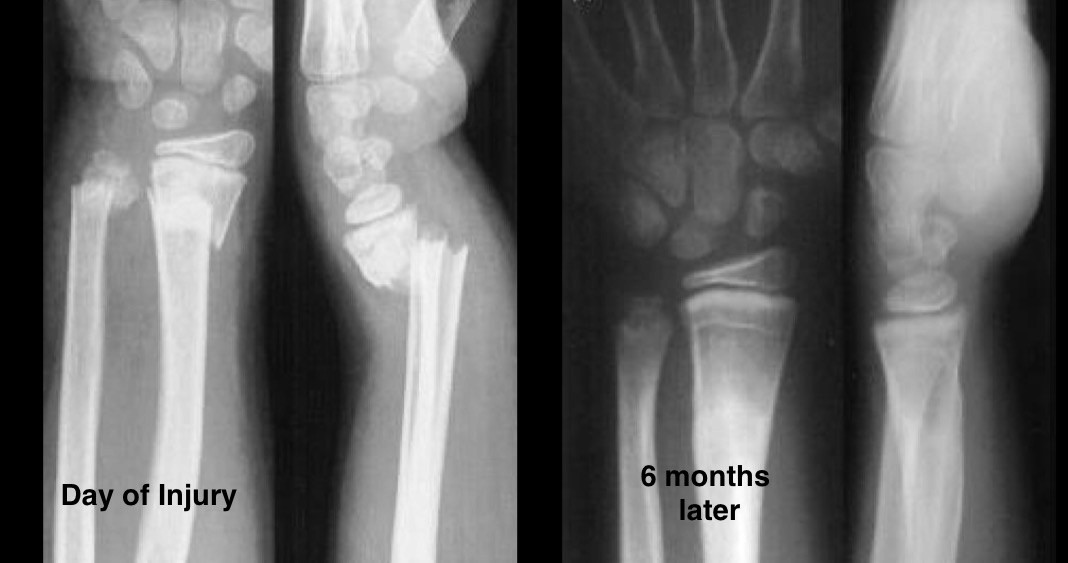
The same child’s fracture at two different stages. The bone has become progressively straighter through the natural process of remodelling.
First, there’s a difference between a fracture healing and a bone becoming straight
This is perhaps the most useful thing I can explain to parents. When a bone breaks, the body’s first priority is to join the broken pieces back together. New bone forms around the fracture, bridging the gap between the fragments, and this gradually strengthens until the fracture is united.
But something rather interesting happens in children. The fracture can be completely healed, yet the bone may still be bent. That’s because healing and remodelling are two different processes.
Healing means the broken bone has joined back together, whereas remodelling describes the gradual process by which bone changes its shape and alignment. Although remodelling begins during fracture healing, it can continue for months or even years afterwards, particularly in children who have plenty of growth remaining.
So when your child’s cast is removed and the X-ray still looks crooked, it doesn’t necessarily mean the fracture has healed badly. It may simply mean that the fracture has healed in an acceptable position that we expect to improve naturally as your child grows.
The important question isn’t whether the X-ray looks perfectly straight today. It’s whether we can confidently expect the bone to develop into a comfortable, functional limb as your child grows. That’s a very different way of thinking about fractures.
Why can children’s broken bones straighten themselves?
The simple answer is that a child’s skeleton is still being built, and it’s much easier to change the shape of a building while construction is still underway than once everything is finished.
Children’s bones differ from adult bones in several important ways. Firstly, they have growth plates, which are areas near the ends of growing bones where new bone is produced as children get taller. Secondly, children have a relatively thick, tough outer covering to their bones called the periosteum. This helps stabilise some fractures and plays an important role in producing new bone during healing.
But perhaps most importantly, children have something adults don’t have: years of growth ahead of them.
Bone is living tissue, constantly being broken down, replaced and reshaped. When a child’s fracture heals with a bend, the growing skeleton can gradually correct some of that deformity. Bone is added in some areas and removed from others, while nearby growth plates can also gradually alter their orientation.
Over time, the shape of the bone changes. Sometimes the improvement is subtle, while on other occasions it’s astonishing. I’ve always found this one of the genuinely satisfying aspects of looking after children’s fractures, particularly when you have a series of X-rays that demonstrates just how much correction has occurred naturally.
Watching a bone straighten as a child grows
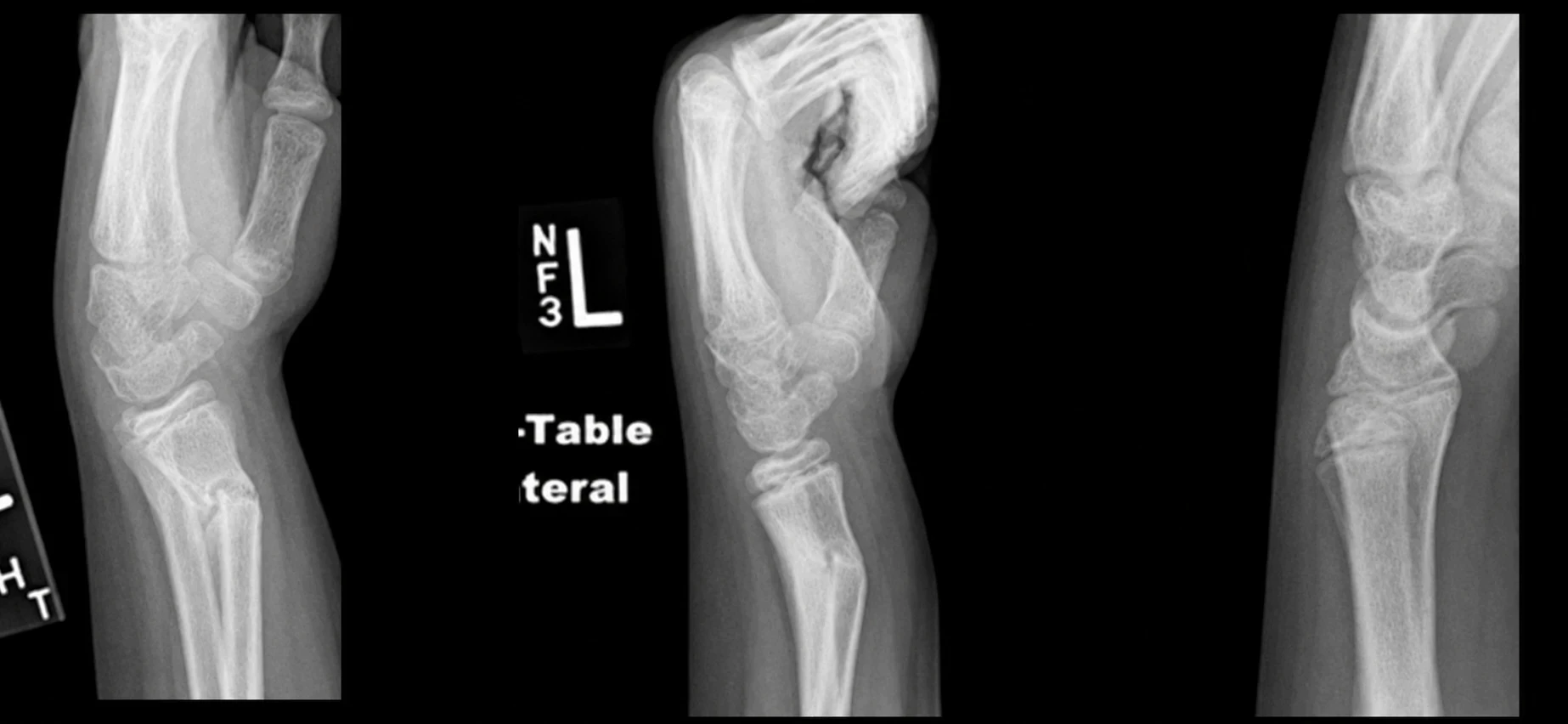
Fracture healing occurs first, but remodelling can continue for many months or even years as a child grows.
Why didn’t the doctors make my child’s broken bone perfectly straight?
This is probably the question I’m asked most often. One of the strangest things for a parent is being shown an X-ray that still looks crooked and being told, “That’s an acceptable position.”
Acceptable? Surely we should be aiming for perfect?
Well, not necessarily. In children’s fracture treatment, an acceptable position doesn’t mean we’ve decided that near enough is good enough. It means we’ve assessed the fracture, the child’s age, the particular bone involved, its position, the direction of the bend and the amount of growth remaining. We’ve then made a judgement about whether the current alignment can reasonably be expected to produce a satisfactory long-term result.
Sometimes making the X-ray look absolutely perfect would mean another manipulation under anaesthetic, inserting wires, plates or screws, or performing an operation. All of those treatments come with potential disadvantages and risks. If a child’s fracture is already in a position that should remodel satisfactorily, achieving a perfectly straight X-ray today may not improve the final result.
The best-looking X-ray isn’t always the best treatment.
Of course, some fractures do require accurate correction, and this is where clinical experience becomes particularly important. The skill lies in knowing which fractures need fixing and which ones are better left to heal and grow. That decision involves considerably more than how dramatic the X-ray looks.
Which children’s fractures straighten best as they grow?
There are four main things I consider when deciding how much remodelling we can reasonably expect.
1. Your child’s age
As a general rule, the younger your child, the greater their ability to remodel a fracture. A five-year-old has many years of growth ahead, whereas a fifteen-year-old may have very little. That difference can completely change the treatment we recommend.
A fracture position that is entirely acceptable in a young child might not be acceptable in an older teenager. This isn’t inconsistency; it’s simply because the younger child has much more time for the bone to reshape itself. In fact, it’s really the amount of growth remaining, rather than simply a child’s age, that matters.
2. Which bone is broken, and where
Not all parts of the skeleton grow at the same rate. Some growth plates contribute much more to the length of a bone than others, and this has an important influence on how well nearby fractures can remodel.
A classic example is the wrist. The growth plate at the wrist end of the radius, one of the two forearm bones, is particularly active. As a result, fractures close to this growth plate can have an impressive ability to remodel, and in younger children quite noticeable angulation may gradually disappear.
The upper end of the humerus, near the shoulder, is another remarkably forgiving area. However, a fracture halfway along a bone may behave very differently, even in the same child.
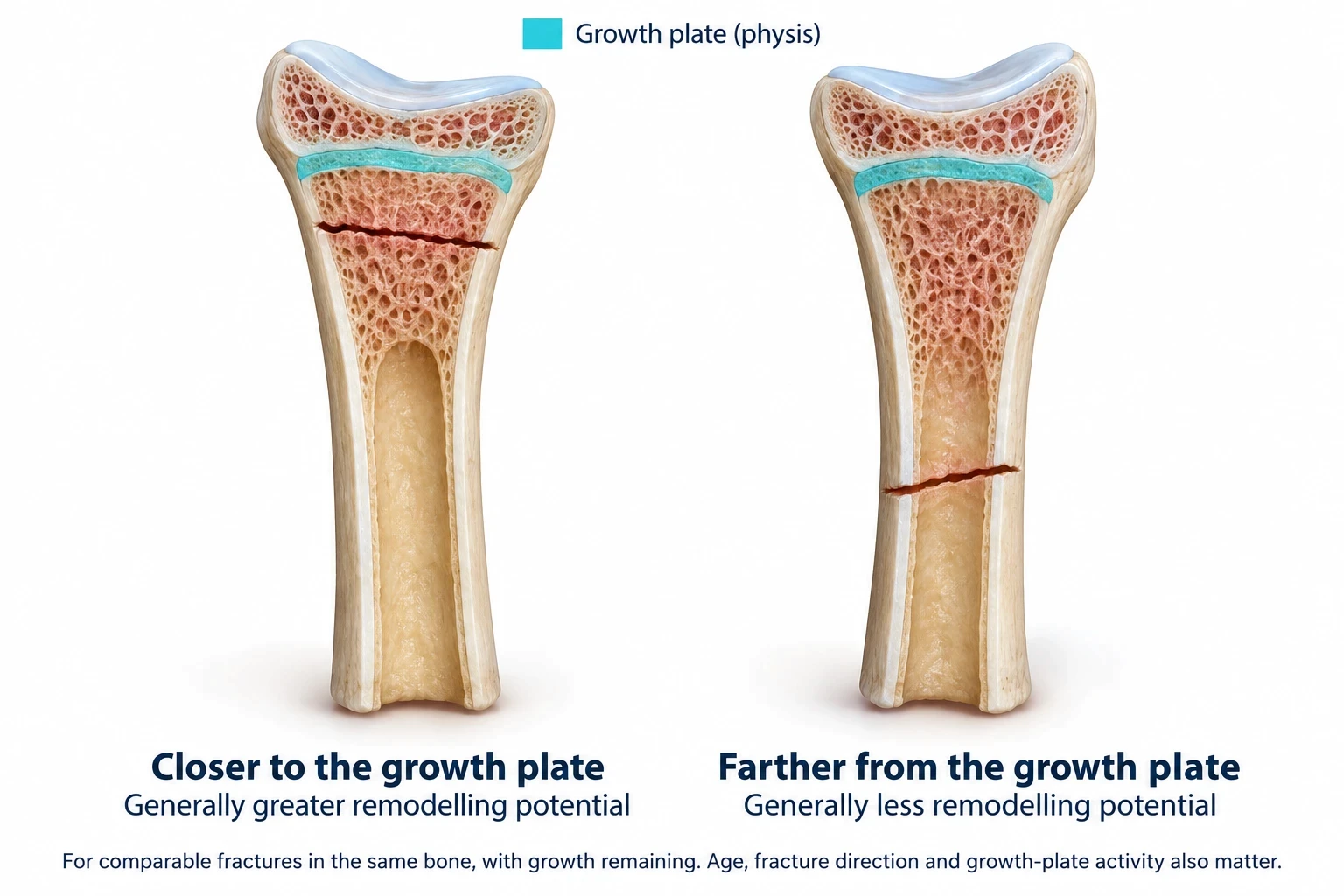
For comparable fractures in the same bone, with growth remaining, a break closer to the growth plate generally has greater remodelling potential. Age, fracture direction and growth-plate activity also matter.
Where a bone breaks can be just as important as how badly it looks broken.
3. Which direction the bone is bent
This is a particularly interesting aspect of remodelling. Bones tend to correct angular deformities most reliably when the bend lies in the same plane as the movement of the nearby joint.
For example, the wrist normally bends forwards and backwards. A fracture near the wrist that is angulated in this direction may therefore have excellent potential to remodel, whereas a bend in another direction may have less ability to correct.
And a bone that’s twisted rather than simply bent is an entirely different matter. I’ll come back to that shortly.
4. How much growth remains
Remodelling takes time. It doesn’t happen in a few days or weeks, and it can continue for months or sometimes years after the fracture has healed.
The more growth a child has ahead, the greater the opportunity for the skeleton to improve its shape. That’s why we’re not simply looking at the X-ray in front of us. We’re trying to predict what that bone will look like when the child finishes growing.
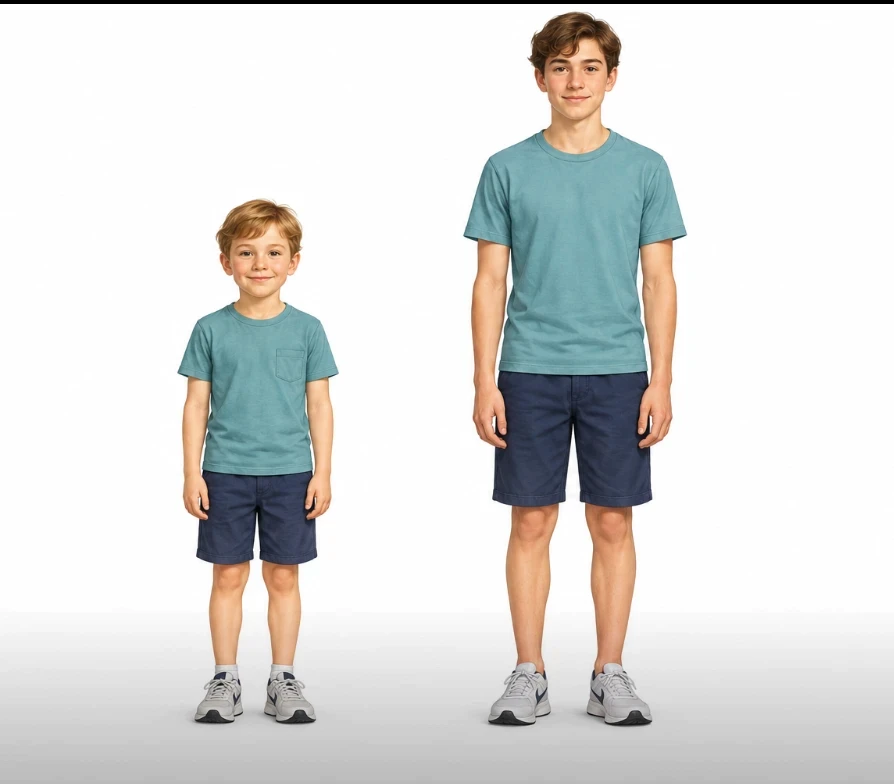
A younger child (around age 5) has many years of growth remaining and generally greater potential for fracture remodelling. An older teenager (around age 15) has much less growth remaining and reduced remodelling potential.
Which broken bones don’t straighten so well?
Now for the really important part. Children’s bones are wonderfully forgiving, but they’re not magic. There are situations where we cannot safely rely on growth to correct a problem, and recognising these is just as important as understanding the potential for remodelling.
A twisted bone is different from a bent bone
This is one of the most important distinctions in fracture care. A bone can heal with an angular deformity, meaning it has a bend, or it can heal with a rotational deformity, meaning one part of the bone is twisted relative to the other.
Children are often very good at correcting certain bends, but they’re much less reliable at correcting a significant twist. This is particularly important with forearm fractures because the two forearm bones need to work together to allow the hand to turn palm-up and palm-down.
A rotational problem can affect that movement even when the X-ray doesn’t look especially alarming. It’s a good example of why examining the child properly is just as important as studying the pictures.
Fractures around the elbow need particular care
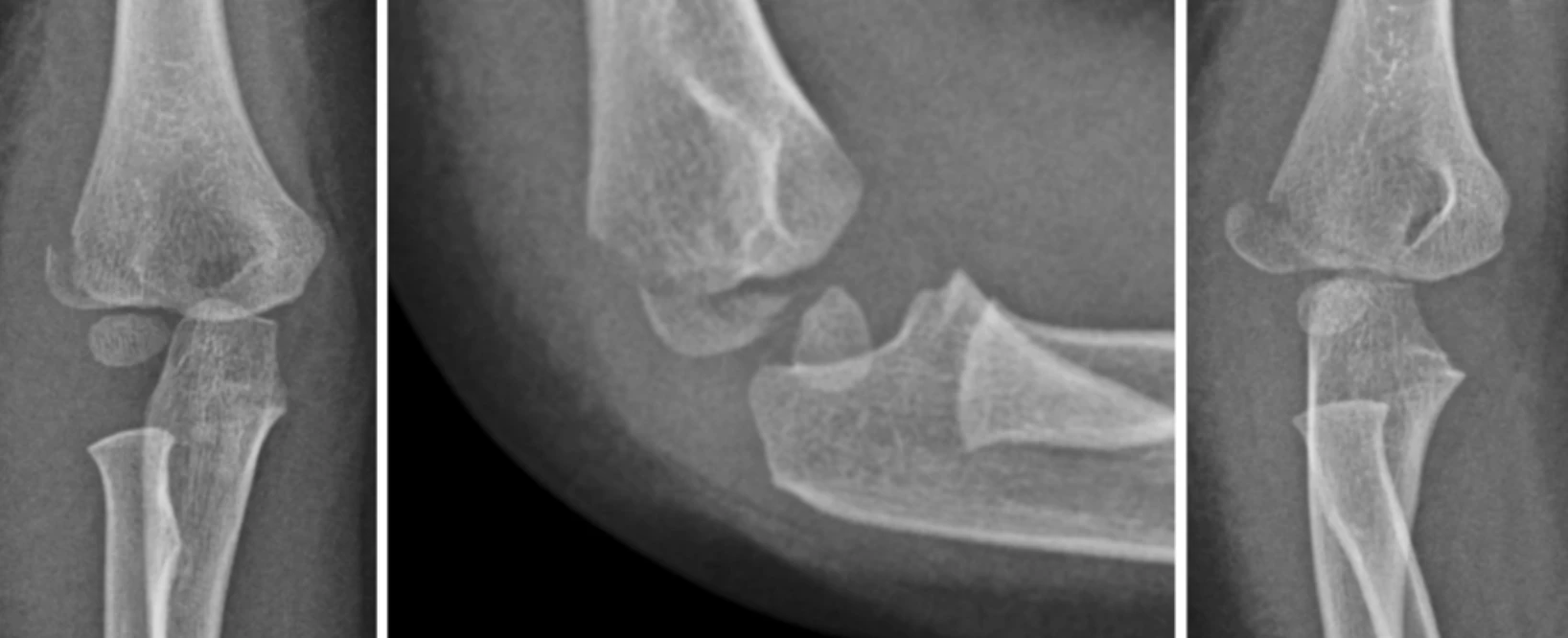
Some childhood elbow fractures have relatively limited remodelling potential, so they need careful assessment.
The wrist is remarkably forgiving, but the elbow is a different proposition. Some childhood elbow fractures have relatively limited remodelling potential, and if certain fractures around the elbow heal in the wrong position, the result may be a persistent deformity or restriction of movement.
That’s why we sometimes recommend an operation for an elbow fracture that looks relatively modest, while happily accepting a much more obvious bend near the wrist.
Different bone, different growth potential, different rules.
Fractures involving a joint surface
When a fracture extends into a joint, the smooth joint surfaces need careful assessment. We cannot simply assume that an uneven joint surface will reshape itself as a child grows.
Certain displaced fractures involving the joint therefore require much more precise correction to minimise the risk of problems with movement or joint function later on.
Growth-plate fractures
Growth plates are wonderful structures, but they can also be vulnerable to injury. Most growth-plate fractures heal without long-term problems; however, some injuries can occasionally damage the growth plate and disturb future growth.
This may lead to a difference in limb length or a gradual change in the alignment of the bone. For particular growth-plate injuries, we therefore recommend longer-term monitoring to make sure growth continues normally.
Older children and teenagers
As children approach the end of growth, their ability to remodel decreases. A sixteen-year-old may therefore need treatment much closer to that of an adult than a six-year-old with a similar-looking fracture.
This is another reason why it isn’t sensible to compare one child’s fracture treatment directly with another’s. Even similar-looking injuries can require different approaches depending on skeletal maturity.
How long does it take for a child’s broken bone to straighten?
This depends on the child, the bone and the fracture, but one thing is certain: remodelling isn’t instantaneous.
A fracture may unite over several weeks, while the shape of the bone continues to improve for months or years. Sometimes the bone becomes almost completely straight, while on other occasions a degree of angulation remains despite the child having an entirely comfortable, functional limb.
And that’s another important distinction. Our aim isn’t simply to achieve a beautiful X-ray. It’s to ensure that the child has a limb that moves comfortably, works properly and allows them to enjoy their normal activities.
Not every fracture needs to become geometrically perfect to achieve an excellent result.
Why was my child sent home with a bandage after breaking their wrist?
This is another situation that understandably makes parents nervous. Your child falls over, hurts their wrist and goes to A&E, where an X-ray confirms a broken bone. Then, rather surprisingly, you’re told they can go home with a simple bandage or removable support, without a traditional plaster cast or sometimes even a routine fracture-clinic appointment.
It can feel a little casual, but there’s a very good reason. Your child may have sustained a buckle fracture, also known as a torus fracture.
Young children’s bones are softer and more flexible than adult bones. Sometimes, rather than snapping completely, the bone simply crumples slightly on one side. Imagine gently compressing a cardboard tube: it buckles, but doesn’t break into two separate pieces.
An uncomplicated buckle fracture of the wrist is a very stable injury, and we now have excellent evidence that these fractures heal reliably without needing a rigid plaster cast.
What did the FORCE trial show?
In 2022, a major British study called the FORCE trial was published in The Lancet. Researchers studied 965 children aged 4–15 years with buckle fractures of the distal radius, recruited from 23 UK hospitals.
They compared two approaches: offering a simple soft bandage with immediate discharge from hospital, or using rigid immobilisation with follow-up according to normal hospital practice.
The findings were reassuring. Pain was equivalent at three days, and there were no meaningful differences in pain or function over the six-week follow-up period. In other words, for these straightforward injuries, a soft bandage and immediate discharge worked just as well as more restrictive treatment.
NICE guidance also recommends that uncomplicated distal radius buckle fractures should not be treated with rigid casts, and that routine follow-up is usually unnecessary.
So being sent home without a plaster cast doesn’t mean your child’s fracture has been dismissed. For a straightforward, correctly diagnosed buckle fracture, it may be exactly the treatment they need.
However, it’s important to appreciate that not every wrist fracture is a buckle fracture. Other fractures may need a cast, manipulation, repeat X-rays or occasionally surgery. The diagnosis matters.
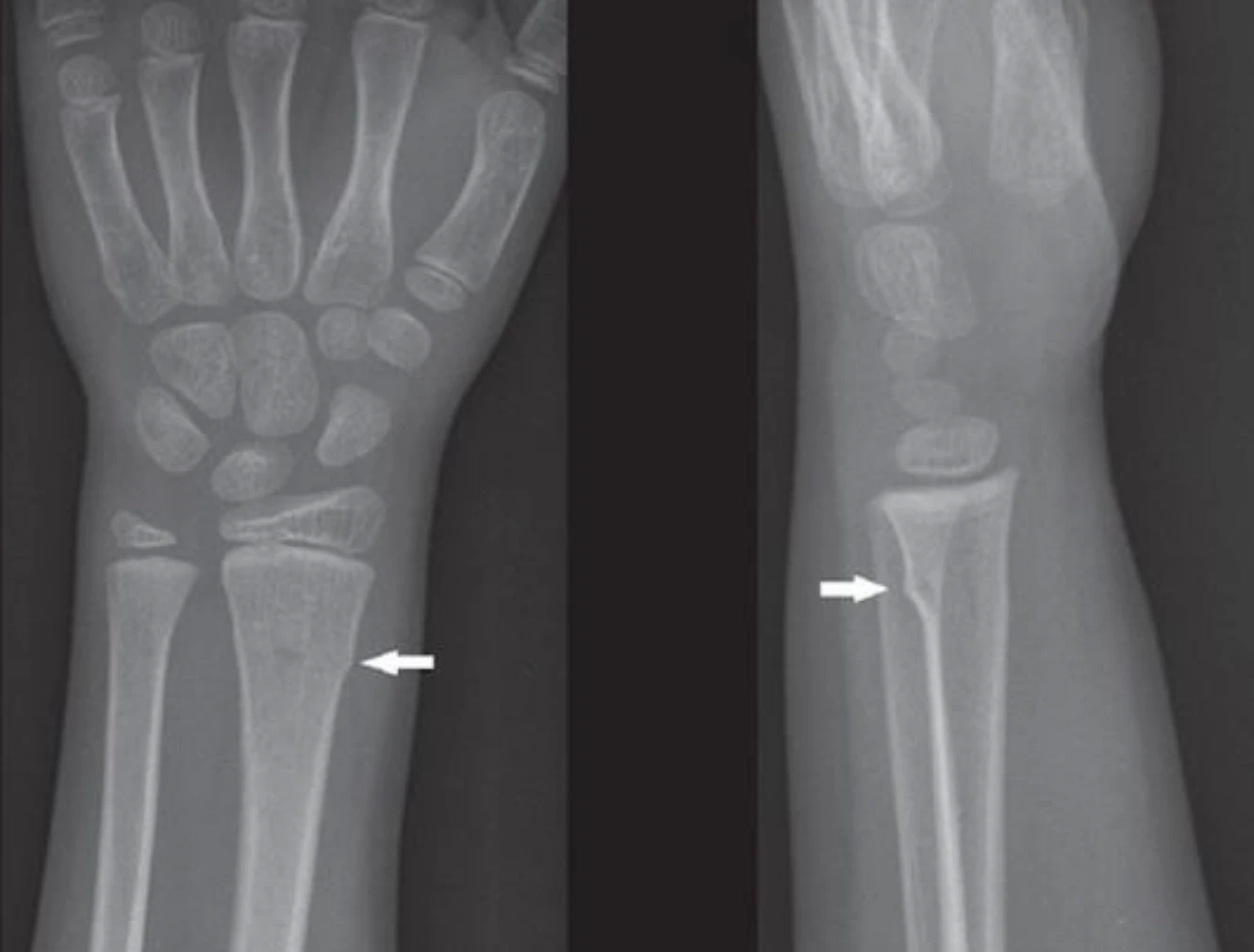
A buckle fracture occurs when the bone compresses and crumples slightly without completely breaking through. These stable injuries can usually be treated without a rigid plaster cast.
Evidence for interested parents:
Will my child’s broken leg end up a different length?
This is another question that understandably worries parents. Occasionally, fractures can influence the eventual length of a limb, and interestingly, it isn’t always because the broken leg ends up shorter.
Some fractures, particularly certain thigh-bone fractures in younger children, can stimulate a period of extra growth. We call this post-traumatic overgrowth. This means that a leg which is slightly shorter immediately after a fracture has healed may subsequently grow a little more than the opposite leg.
We sometimes take this into account when deciding how to treat a fracture. It sounds rather counterintuitive, but the growing skeleton has some surprisingly sophisticated responses to injury.
The opposite situation can also occur. If a growth plate is significantly damaged, growth may slow down, stop prematurely or become uneven. Fortunately, most children’s fractures do not lead to a significant permanent difference in limb length.
When a particular injury carries a risk of disturbing growth, we can monitor things over time. Again, we aren’t simply treating the X-ray in front of us today. We’re thinking about the skeleton that child will have in five or ten years.
When should I worry that my child’s fracture isn’t healing properly?
Most childhood fractures heal extremely well, and a visible bend after the cast comes off doesn’t automatically mean something is wrong. However, there are situations where I would recommend further assessment rather than simply waiting for remodelling to occur.
Seek urgent medical attention if:
Your child develops severe or increasing pain, particularly inside a cast.
Their fingers or toes become cold, pale, blue or increasingly numb.
There is marked swelling, difficulty moving their fingers or toes, or a cast that feels excessively tight.
These symptoms need prompt medical assessment rather than waiting for a routine appointment.
Arrange a review if:
The limb appears to be becoming progressively more crooked.
Your child is struggling to regain normal movement after the expected recovery period.
Pain or swelling isn’t improving as expected.
The limb appears twisted rather than simply bent.
You notice a concerning difference in alignment or limb length.
Your child has had a growth-plate injury and you’re unsure about the follow-up plan.
And there’s another perfectly reasonable reason to seek advice: you simply don’t understand why the X-ray has been accepted.
Parents occasionally apologise to me for asking the same question twice, but there’s really no need. If you’re being asked to trust that a broken bone will straighten itself, you deserve to understand why your child’s particular fracture is suitable for that approach.
Does my child’s broken bone need an operation?
Most children’s fractures don’t require surgery, but some certainly do. The decision depends on several factors, including the child’s age and remaining growth, which bone is broken, the position and stability of the fracture, and whether the injury involves a joint or growth plate.
We also need to consider whether there is significant twisting or displacement, the condition of the surrounding skin and soft tissues, the nerves and circulation, and how much correction we can realistically expect through remodelling.
Sometimes an operation is clearly the safest option. A fracture may be unstable, involve the joint surface or have a deformity that growth is unlikely to correct. In those circumstances, accurately restoring the alignment may be important to prevent problems later on.
But in other situations, surgery would expose a child to an anaesthetic, scars and potential complications without improving their eventual result. The temptation is to assume that doing more must be better, but in children’s orthopaedics that simply isn’t always true.
Sometimes the most skilful decision is knowing when not to operate.
And sometimes it’s recognising that a particular fracture simply cannot safely be left to nature. That’s why individual assessment is so important.
What I tell parents in my clinic
I often find that the most convincing thing I can do isn’t to offer a complicated explanation. It’s to show them the pictures.
If I have a suitable series of X-rays, I’ll show parents how an angulated fracture has changed over time. The first image may look rather alarming, but a few months later the bend is noticeably smaller. A year or two later, the bone may be dramatically straighter.
Suddenly, the idea of remodelling becomes real. You can almost see the tension disappear from their shoulders because they no longer have to take my word for it. They can actually see what the growing skeleton is capable of doing.
And that’s why I think it’s important to explain not just what we’re doing, but why. When parents are shown an X-ray that still looks crooked, being told that it’s acceptable isn’t always enough. They deserve to understand what we expect to happen next.
So if your child’s arm still looks bent when the plaster comes off, remember this:
The X-ray you’re looking at today isn’t necessarily the X-ray your child will have in a year.
Children’s bones have a remarkable ability to reshape themselves. Our job is to understand when we can safely trust that ability and when we need to give nature a helping hand.
And sometimes, the best treatment is simply to let a child’s growing skeleton do what it does so extraordinarily well.
Worried about your child’s broken bone?
If your child has sustained a fracture and you’re concerned about the way it’s healing, whether the bone will straighten or whether surgery is really necessary, I’m happy to provide an assessment or second opinion.
Sometimes the most valuable thing we can do is sit down together, look through the X-rays and explain what we expect to happen next.
About the author
Mr Nev Davies
Consultant Trauma & Orthopaedic Surgeon — Specialist in Children’s Orthopaedics and Knee Surgery
Mr Nev Davies has been a Consultant Trauma & Orthopaedic Surgeon since 2010, with a specialist interest in children’s orthopaedics and knee surgery. His clinical work includes assessing and treating fractures, growth-related conditions, limb alignment problems and a wide range of musculoskeletal concerns affecting children and adolescents.
Through his Worried Parents series, Nev aims to explain common childhood orthopaedic conditions in straightforward language, helping families understand when reassurance is appropriate and when further assessment or treatment may be needed.
Meet Mr Nev Davies · Book a consultation
Frequently asked questions
Will my child’s broken arm straighten as they grow?
Many childhood arm fractures can remodel considerably as a child grows, particularly near active growth plates. The amount of correction depends on the child’s age, the position of the fracture and the direction of the deformity. Not every fracture will straighten completely.
Why does my child’s wrist still look bent after the plaster comes off?
The fracture may have healed in a position that is expected to improve through natural remodelling. A visible bend doesn’t necessarily mean the treatment has failed, although the expected correction should be assessed for each child.
How long does it take for a broken bone to remodel?
Remodelling happens gradually over months and sometimes years. Younger children generally have greater capacity for correction than older teenagers.
Can a twisted bone straighten as a child grows?
Significant rotational deformity is much less likely to correct reliably than angular deformity. A bone that has healed with a twist needs careful assessment.
Why didn’t the doctors make my child’s fracture perfectly straight?
A perfectly straight X-ray isn’t always necessary for a good long-term result. If the position is acceptable and growth is likely to correct the deformity, further manipulation or surgery may provide no additional benefit.
Do buckle fractures need plaster casts?
Uncomplicated buckle fractures of the distal radius can usually be managed with a soft bandage or removable support. Rigid casting and routine follow-up are generally unnecessary for these stable injuries.
Do growth-plate fractures need long-term follow-up?
It depends on the injury. Many heal without problems, but some can affect future bone growth and require longer-term monitoring.
Does a crooked-looking fracture always need an operation?
No. Many fractures can be managed without surgery. The decision depends on the child’s age, the bone involved, fracture stability, alignment, associated injuries and expected remodelling.
More from the Worried Parents series
You may also find these guides helpful: Why do my child’s feet turn in? Intoeing explained, Is it normal for a child to have flat feet? and Why does my child wake up crying with leg pain at night?
Further reading and evidence
NICE Guideline NG38 — Fractures (non-complex): assessment and management
Perry et al. — Immobilisation of torus fractures of the wrist in children (FORCE), The Lancet, 2022
Remodelling in Children’s Fractures and Limits of Acceptability, 2021
Fracture Remodeling in Children: Which Fractures Remodel and Which Do Not?, 2019
This article provides general educational information and is not a substitute for individual medical assessment. The management of any fracture must be tailored to the child’s specific injury and circumstances.